Free classroom resources

What do you need to do next?

Choose a teaching job, refine by subject and grade, then open student materials and separate teacher guidance. Free PDFs and editable files; no sign-up.

21Grade 6 ELA resources
3Grade 6 math teaching kits
10Science resources
8Teacher-planning tools
15Featured collections
1Historical-map inquiry collection

The resource library

Choose your resource

Refine your teaching job by subject, grade or a specific need.

Need a complete kit? ↓
More filters: resource type and teaching need
Choose a resource topic

Choose a grade for student materials. Teacher tools remain available; check the grade and subject of their worked examples.

48 available resources
Middle-school scienceTeacher guide
Teacher guidance excerpt for Thermal Energy Session Routes: Print the teacher guide and use the student selections listed on each session page. Keep the matching teacher keys and quick starts separate. The complete thermal energy classroom archive contains the six resources and the start guide. The optional cool-water investigation archive contains its own materials and forms. No student internet access is required.

Plan the six-kit teaching sequence

Thermal Energy Session Routes

Plan a six-session paper route or an eight-session route with practical continuation points, prerequisites and selected pages to print.

See teacher guide for timing*Paper + pencil

PDF + editable Word + HTML

View resource
Middle-school scienceTeaching kit
Teacher guidance excerpt for Thermal Energy Evidence Portfolio: Record “evidence visible”, “partial/unclear”, or “not yet elicited”, anchored to a specific response. Missing evidence does not prove lack of understanding. Clarify table access, question meaning and response mode before reteaching. No validated rubric, mastery label, ability score or effect-size claim.

Evidence across six dimensions

Thermal Energy Evidence Portfolio

Use fresh integrative tasks and annotated fictional examples to describe evidence across six thermal reasoning dimensions.

See teacher guide for timing*Paper + pencil

PDF + editable Word + HTML

View resource
Middle-school scienceOptional practical investigation
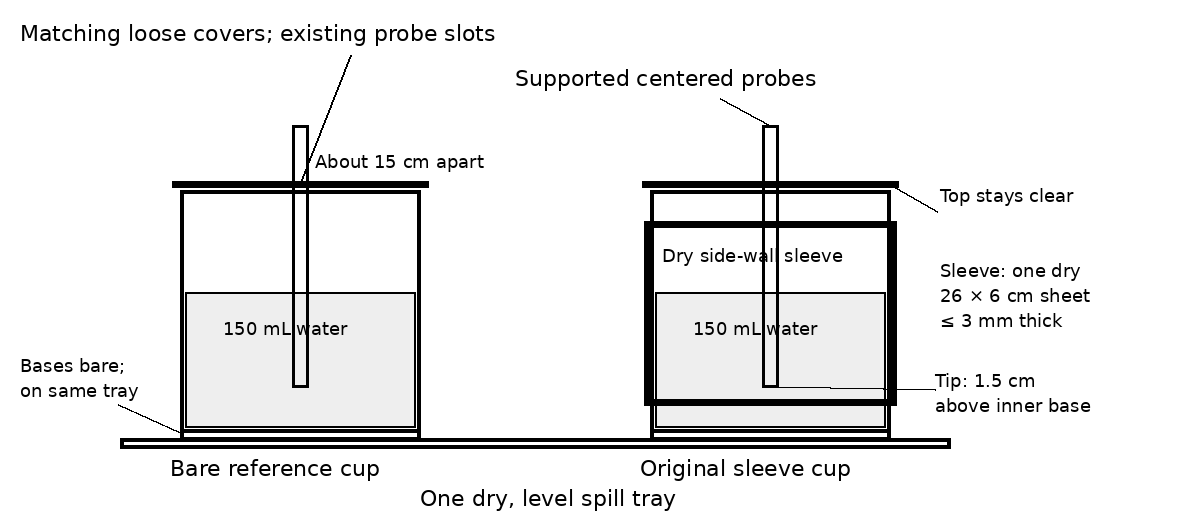
Cool-water practical apparatus: matched cups, sleeves, covered probes and spill tray. Supplied-data phases are available separately.

Optional practical investigation

Cool-Water Design Investigation

Plan a fair cool-water comparison, record baseline and prototype trials, then redesign and retest. Includes a complete supplied-data alternative.

See teacher guide for timing*Stated materials + supervision

PDF + editable Word + HTML

View resource
Middle-school scienceTeaching kit
Teacher guidance excerpt for Choose, Test & Improve a Thermal Protector: Target: evaluate all criteria and constraints, justify a tradeoff, propose a design and test, then revise against new evidence. Intended for middle school. Prerequisites: table headings, °C, time, temperature change, comparable trials and claim scope; teach the prerequisite bridge when needed.

Design criteria and improvement

Choose, Test & Improve a Thermal Protector

Compare every design criterion, justify a choice, propose a redesign, and use new evidence to reassess it.

See teacher guide for timing*Paper + pencil

PDF + editable Word + HTML

View resource
Middle-school scienceTeaching kit
Teacher guidance excerpt for Revise the Claim When Results Change: Target: compare new evidence with a particular claim, check relevant conditions and retain/narrow/change/withhold only as justified. Prerequisites: starts/units/change, matched trials and bounded claims; The prerequisite bridge supplies a check and explanation. Intended for Grade 6 within the NGSS Grades 6–8 band; check local course placement.

Claim revision

Revise the Claim When Results Change

Compare new evidence with a particular claim, check conditions and justify retaining, narrowing, changing or withholding a conclusion. Student and teacher downloads, print selections and teacher guidance.

See teacher guide for timing*Paper + pencil

PDF + editable Word + HTML

View resource
Middle-school scienceTeaching kit
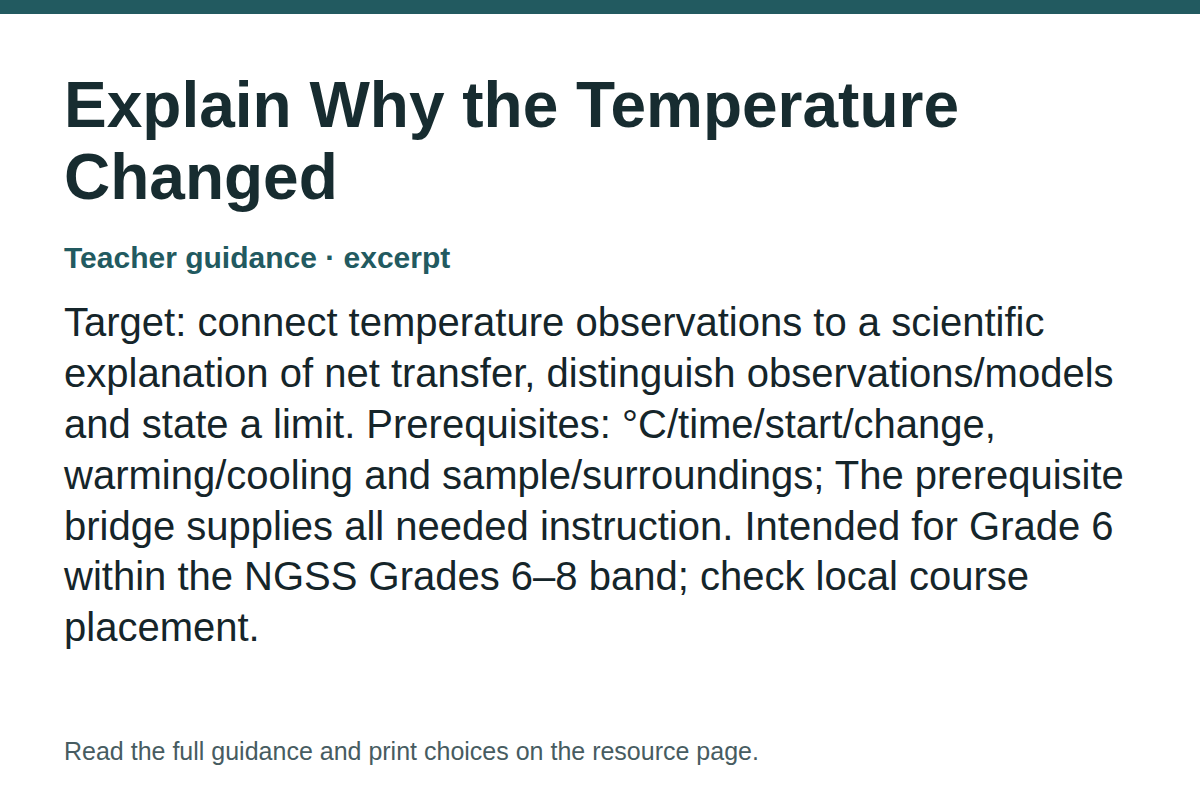
Teacher guidance excerpt for Explain Why the Temperature Changed: Target: connect temperature observations to a scientific explanation of net transfer, distinguish observations/models and state a limit. Prerequisites: °C/time/start/change, warming/cooling and sample/surroundings; The prerequisite bridge supplies all needed instruction. Intended for Grade 6 within the NGSS Grades 6–8 band; check local course placement.

Scientific explanation

Explain Why the Temperature Changed

Connect specific temperature evidence to an explanation of net thermal-energy transfer and distinguish observations from the explanatory model. Student and teacher downloads, print selections and teacher guidance.

See teacher guide for timing*Paper + pencil

PDF + editable Word + HTML

View resource
Middle-school scienceFoundation kit
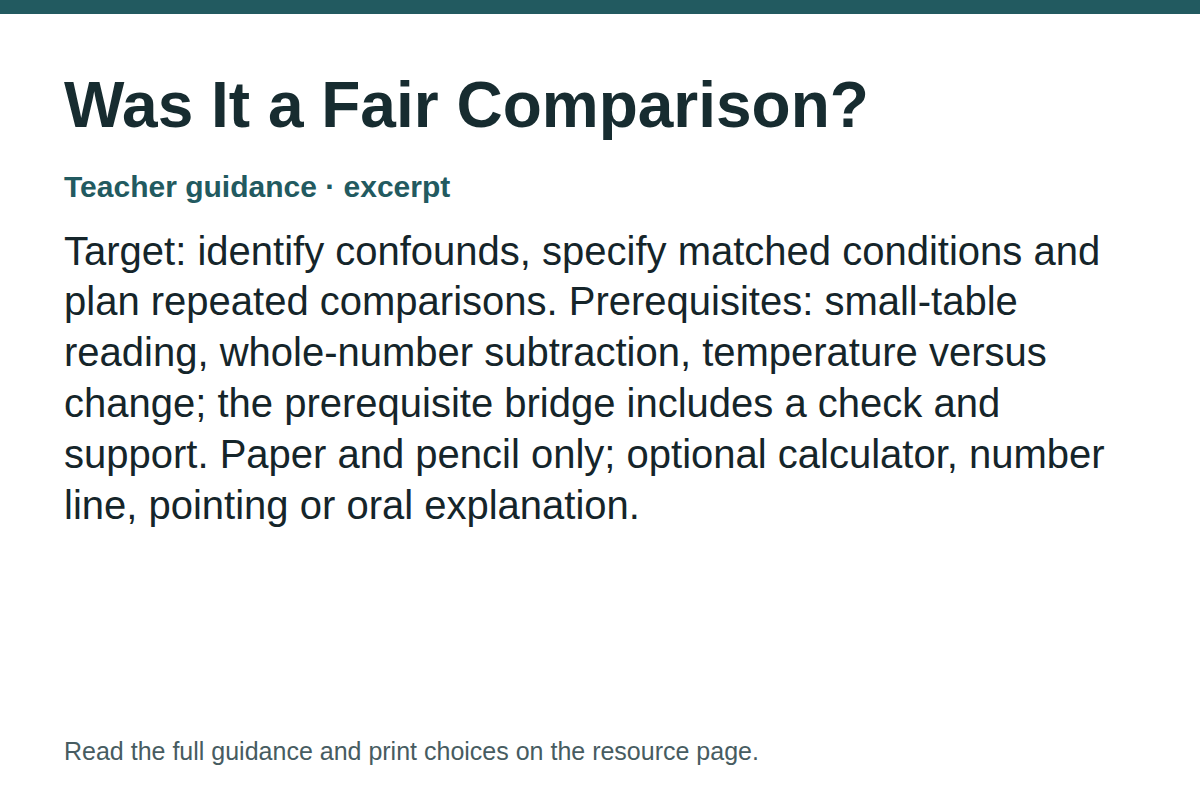
Teacher guidance excerpt for Was It a Fair Comparison?: Target: identify confounds, specify matched conditions and plan repeated comparisons. Prerequisites: small-table reading, whole-number subtraction, temperature versus change; the prerequisite bridge includes a check and support. Paper and pencil only; optional calculator, number line, pointing or oral explanation.

Fair comparisons

Was It a Fair Comparison?

Evaluate confounds and specify a fair comparison and recording plan.

35–45-minute lesson*Paper + pencil

PDF + editable Word + HTML

Middle-school scienceTeacher guide
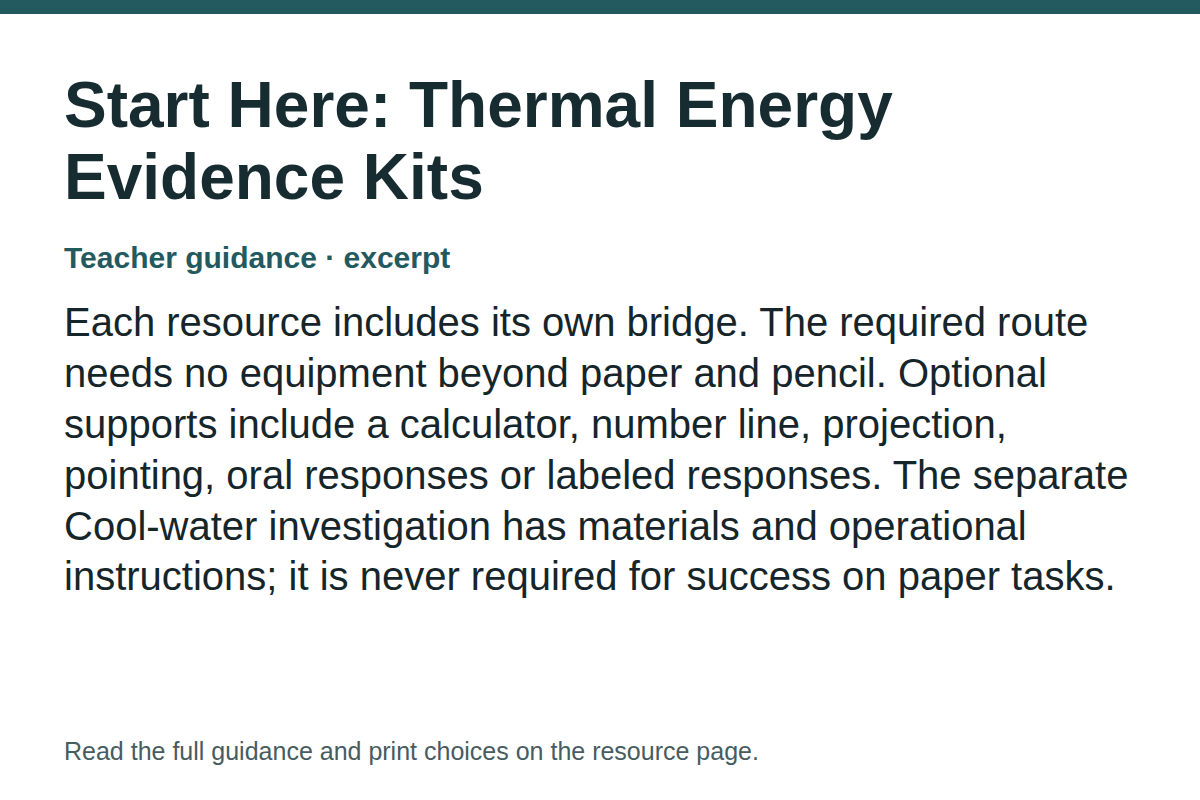
Teacher guidance excerpt for Start Here: Thermal Energy Evidence Kits: Each resource includes its own bridge. The required route needs no equipment beyond paper and pencil. Optional supports include a calculator, number line, projection, pointing, oral responses or labeled responses. The separate Cool-water investigation has materials and operational instructions; it is never required for success on paper tasks.

Thermal-energy teaching routes

Start Here: Thermal Energy Evidence Kits

Choose a six-kit supplied-data or optional practical route, pages to print, and fresh follow-ups.

10–15 min preparation*Paper + pencil

PDF + editable Word + HTML

Middle-school scienceFoundation kit
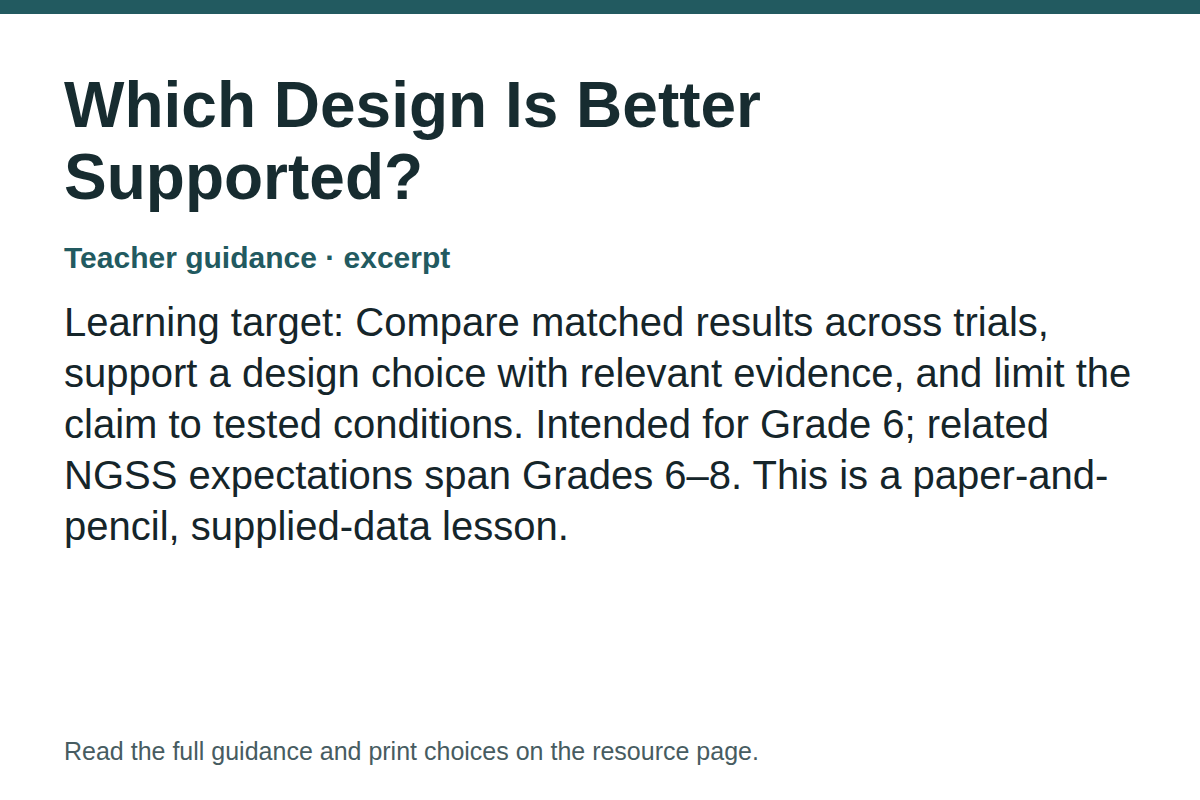
Teacher guidance excerpt for Which Design Is Better Supported?: Learning target: Compare matched results across trials, support a design choice with relevant evidence, and limit the claim to tested conditions. Intended for Grade 6; related NGSS expectations span Grades 6–8. This is a paper-and-pencil, supplied-data lesson.

Thermal-energy evidence

Which Design Is Better Supported?

Compare temperature results across trials, support a sleeve choice, and limit the claim. Includes its prerequisite mini-lesson.

36–44-minute lesson*Paper + pencil

PDF + editable Word + HTML

Grade 6 mathTeaching kit
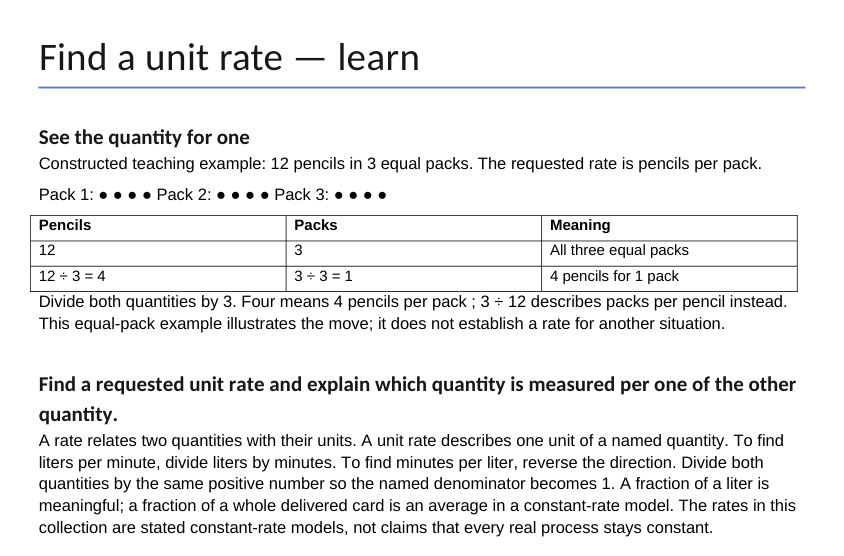
Current unit-rate model: 12 pencils in 3 packs becomes 4 pencils per pack, with both quantities divided by 3.

Unit-rate meaning

Find and Interpret “Per One”

Find a requested unit rate, label both quantities and explain what “per one” means. Use separate checks and supplied response tasks.

Select a routeStart Here for preparation

PDF + editable Word + HTML

Grade 6 mathTeaching kit
Teacher guidance excerpt for Compare Unit Rates on the Same Basis: Choose a defensible comparison by finding rates with the same units and direction, then interpret the result for the stated goal.

Fair unit-rate comparison

Compare Unit Rates on the Same Basis

Compare rates with the same units and direction, explain ties and missing information, and check whether totals could mislead. Includes response teaching for whole packs when the lower unit price does not settle the purchase total.

Select a routeStart Here for preparation

PDF + editable Word + HTML

Grade 6 mathTeaching kit
Teacher guidance excerpt for Equivalent Ratios: Scale Both Quantities: Generate or reject a candidate equivalent ratio by explaining how both labeled quantities change together.

Equivalent ratios

Equivalent Ratios: Scale Both Quantities

Use complete groups and a ratio table to explain equivalent ratios, challenge a same-addend error, and choose a focused follow-up.

35–45-minute lesson*4–6 min prep*

PDF + editable Word + HTML

Teacher guidance excerpt for Fiction and Vocabulary Exit Tickets: Learners explain the target word’s meaning, supply all clues or details requested by that ticket, and explain how those clues support the meaning. Accept clear paraphrases and established oral, dictated, or communication methods when handwriting is not the focus. Allow extra paper when needed.
Grade 6 ELAPractice & checks

Vocabulary exit tickets

Fiction and Vocabulary Exit Tickets

Eight fictional excerpt-and-question pairs for explaining word meaning through context.

4 minutes per ticket*8 min prep*

PDF + editable Word + HTML

Teacher guidance excerpt for Write an Evidence-Based Paragraph: In this estimated 40-minute lesson, learners write a focused paragraph that answers a text question, supports the answer with accurate details, explains how those details connect to the claim, and ends clearly. They keep claims within the passage and distinguish evidence from explanation.
Grade 6 ELALesson

Evidence-based writing

Write an Evidence-Based Paragraph

Write a focused paragraph with an answer, accurate evidence, and an explanation of the connection.

40-minute lesson*5 min prep*

PDF + editable Word + teaching slides + HTML

Teacher guidance excerpt for Evidence Paragraphs: Check, Respond and Revise: Start with Write an Evidence-Based Paragraph and Revise a Paragraph for Clarity and Coherence. Then choose a check, a practice task and a follow-up story. The passages are fictional examples for classroom use.
Grade 6 ELAPractice and checks

Evidence writing and revision

Evidence Paragraphs: Check, Respond and Revise

Check a supported paragraph and a meaning-preserving revision, choose a focused practice task, then reserve different material to look again after teaching.

Choose what to teach nextStart Here for print selections

PDF + editable Word + HTML

Teacher guidance excerpt for Five-Day Nonfiction Warm-Up Pack: Use one day page at a time. Days may be used in any order; each page repeats its directions, includes the complete reading, and stands on its own.
Grade 6 ELAPractice & checks

Nonfiction warm-ups

Five-Day Nonfiction Warm-Up Pack

Five short informational passages with evidence questions and separate answer guidance.

6 minutes per warm-up*7 min prep*

PDF + editable Word + HTML

Teacher guidance excerpt for Practical Lesson-Planning Pack: Free planning aid. Write brief phrases or edit the spaces. See “Field notes and alignment check”; the completed example is in the separate teacher guide.
Teacher planningTeacher tool

Planning

Practical Lesson-Planning Pack

Blank planning pages, a completed example, and a separate Grade 6 student copy.

45-minute worked example*15 min prep*

PDF + editable Word + HTML

Teacher guidance excerpt for Reading Skills Check and Next Steps: Use a check only for a skill students have already been taught. Keep later passages unseen until their intended use.
Grade 6 ELAPractice & checks

Reading checks

Reading Skills Check and Next Steps

Three low-stakes checks for evidence, inference, and summary, with response-linked follow-up ideas.

6 minutes per check*8 min prep*

PDF + editable Word + HTML

Teacher guidance excerpt for Character Change: Check and Next Steps: After teaching Explain How a Character Changes, use a new story to see how students compare early and later evidence. Choose a practice task from their responses, then revisit the same skills with another story.
Grade 6 ELAPractice and checks

Character change and evidence

Character Change: Check and Next Steps

Use a new story to explain character change with early and later evidence, then choose a supplied response task and reserve another passage to look again.

Choose what to teach nextStart Here for print selections

PDF + editable Word + HTML

Teacher guidance excerpt for Respond to a Counterargument: In this estimated 40-minute lesson, learners respond to a counterargument by representing it accurately, acknowledging why it matters, and offering a related reason, practical change, qualification, or limit. Learners may support or oppose either position. Score fair representation and reasoning, not ideological agreement.
Grade 6 ELALesson

Counterargument

Respond to a Counterargument

Represent another position fairly and respond with a relevant reason, qualification, or practical change.

40-minute lesson*5 min prep*

PDF + editable Word + HTML
Teacher guidance excerpt for Arguments: Check, Respond and Reconsider: Use this pack after teaching Distinguish Claims, Reasons, and Relevant Evidence and Respond to a Counterargument. Review a short student response, choose practice for the skill that needs attention, and use a new situation for a follow-up check.
Grade 6 ELAPractice and checks

Argument roles and fair replies

Arguments: Check, Respond and Reconsider

Check argument roles and a fair response to a counterargument, choose a focused practice task, then use a follow-up task to look again.

Choose what to teach nextStart Here for print selections

PDF + editable Word + HTML
Teacher guidance excerpt for Evidence and Revision Review Cards: Choose a few cards after relevant instruction. The deck groups four cards per move: add evidence (1–4), explain a link (5–8), narrow a claim (9–12), and remove/replace unsupported material (13–16).
Grade 6 ELAPractice & checks

Review cards

Evidence and Revision Review Cards

Sixteen short-response revision cards; use a selection with the recording sheet and explanatory key.

5 minutes per card; 40-minute session*12 min prep*

PDF + editable Word + HTML

Teacher guidance excerpt for Substitute Handoff and Independent-Work Pack: Prepare a class-day handoff that lets an authorized substitute start safely, follow established routines, guide a complete independent assignment, and return useful work notes without guessing local procedures or copying unnecessary student information.
Teacher planningTeacher tool

Substitute planning

Substitute Handoff and Independent-Work Pack

Prepare a handoff with local routines, complete independent work and a clear return route. Includes a worked literacy handoff.

5-minute handoff scan*15 min prep*

PDF + editable Word + HTML
Teacher guidance excerpt for Teach and Reteach Classroom Routines: Plan one classroom routine as a behavior learners are shown, guided to rehearse, observed, and retaught when needed. Use the blank card to keep the purpose, cue, action steps, practice, participation options, and reteach check connected.
Teacher planningTeacher tool

Classroom routines

Teach and Reteach Classroom Routines

Plan one routine with a clear cue, practice steps, participation options, and a reteaching check.

12-minute model and rehearsal*10 min prep*

PDF + editable Word + HTML

Teacher guidance excerpt for Clear Directions and Language-Support Pack: Plan directions learners can follow and language supports matched to a specific barrier. State what learners will think and show, chunk the task into visible steps, clarify essential words, choose response routes that fit the target, and check both direction understanding and the task evidence separately.
Teacher planningTeacher tool

Language support

Clear Directions and Language-Support Pack

Make task steps clear and choose language support without supplying the answer. Includes reading, writing and argumentation examples.

3-minute directions introduction*12 min prep*

PDF + editable Word + HTML

Teacher guidance excerpt for Practical Family-Communication Templates: Adapt a clear, factual, non-shaming message for a welcome, positive update, work record check-in, meeting request, or factual concern. Replace every bracketed placeholder with verified details, use the current locally approved communication process, and avoid guessing about motive or family circumstances.
Teacher planningTeacher tool

Family communication

Practical Family-Communication Templates

Adapt clear family messages and invite brief reading, writing or argument practice with a goal-specific family guide.

2-minute team orientation*6 min prep*

PDF + editable Word + HTML

Teacher guidance excerpt for First 30 Days of New-Teacher Mentoring: Use an adaptable first-month mentoring cycle that lets a new teacher choose a focus, meet with a mentor, gather low-inference observation notes when locally appropriate, select one support action, and reflect at follow-up. Clarify locally whether the relationship is developmental mentoring or formal evaluation and how notes may be used before an observation.
Teacher planningTeacher tool

Mentoring

First 30 Days of New-Teacher Mentoring

Plan a teacher-owned mentoring cycle with meeting forms, fictional examples and a complete unit-rate rehearsal: interpret student reasoning, choose teaching and return to a fresh check.

15-minute orientation*10 min prep*

PDF + Word forms + HTML rehearsal

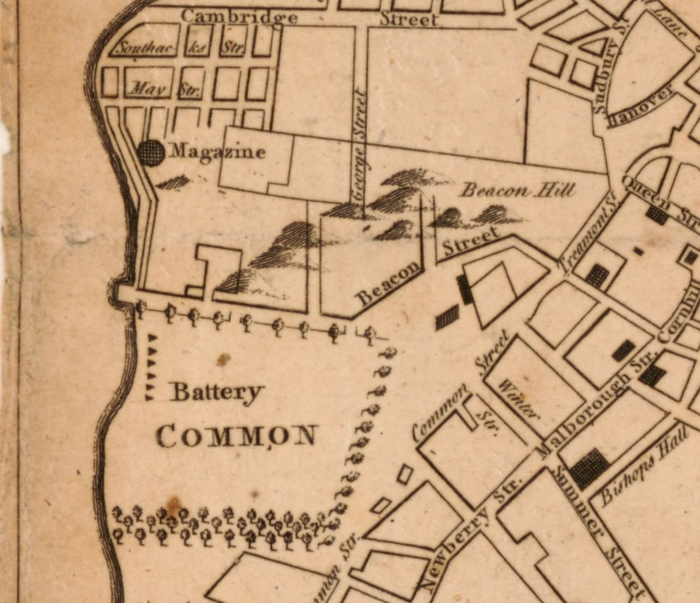
Authentic 1775 Boston map detail showing the Common and nearby streets
Grades 6–8 history and geographyMap inquiry

Observation, inference and historical evidence

Read Maps and Explain Change with Evidence

Compare authentic Boston maps, read a short report and explain what the evidence supports.

Two lessons + focused next tasksStart Here for print selections

PDF + editable Word + HTML
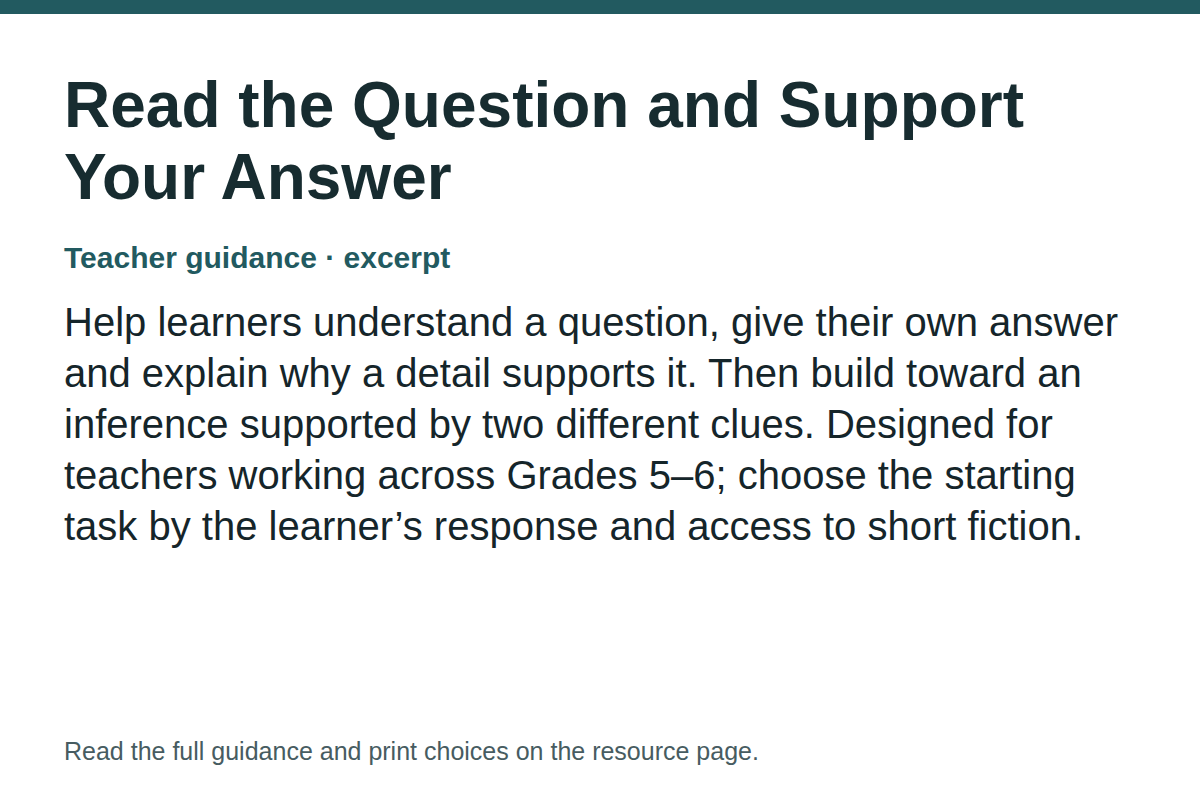
Teacher guidance excerpt for Read the Question and Support Your Answer: Help learners understand a question, give their own answer and explain why a detail supports it. Then build toward an inference supported by two different clues. Designed for teachers working across Grades 5–6; choose the starting task by the learner’s response and access to short fiction.
Grades 5–6 ELAReading bridge

Question, detail and explanation

Read the Question and Support Your Answer

Teach an answer supported by one detail, then an inference supported by two clues.

Two short teaching sessionsChoose pages from Start Here

PDF + editable Word + HTML

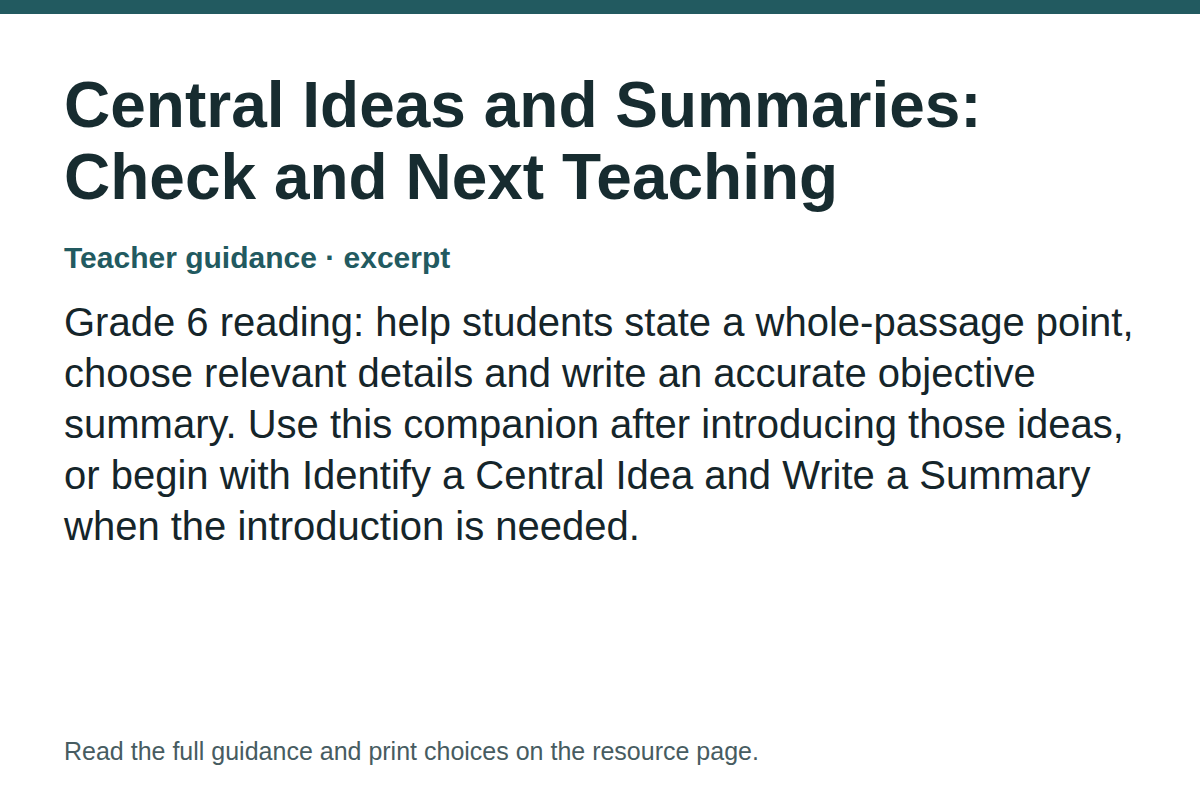
Teacher guidance excerpt for Central Ideas and Summaries: Check and Next Teaching: Grade 6 reading: help students state a whole-passage point, choose relevant details and write an accurate objective summary. Use this companion after introducing those ideas, or begin with Identify a Central Idea and Write a Summary when the introduction is needed.
Grade 6 ELAPractice and checks

Central ideas and objective summaries

Central Ideas and Summaries: Check and Next Teaching

Help Grade 6 readers move from a summary response to focused teaching: find the whole-passage point, choose and combine details, correct overstatements, then try different check and comparison texts.

Choose what to teach nextStart Here for print selections

PDF + editable Word + HTML
Selected Grade 7 mathTeaching kit
Teacher guidance excerpt for Test and Explain Proportional Relationships: Teach learners to decide whether a whole relationship is proportional, connect a table to a rule and graph, and qualify a prediction. A correct per-one calculation for one pair is a foundation, not proof that every pair follows the same rule.

Proportional relationship reasoning

Test and Explain Proportional Relationships

Teach selected Grade 7 learners to test proportional relationships across tables, rules and graphs, respond to one-pair or starting-value shortcuts, then use different checks and transfer.

Select a routeStart Here for preparation

PDF + editable Word + HTML

Selected Grade 8 mathTeaching kit
Teacher guidance excerpt for Explain and Compare Linear Relationships: Teach learners to find change per input unit, recover a starting amount from nonzero observations, connect a rule to a table and graph, and distinguish greater rate from greater output. Earlier proportional-relationship teaching already explains nonzero starts. This collection adds finding and using the two parameters when the rate is not supplied.

Linear relationship reasoning

Explain and Compare Linear Relationships

Find change per input unit from unequal intervals, recover an initial value from nonzero observations, and compare linear models. Supplied teaching, targeted responses, different later checks and transfer include complete keys.

Select a routeStart Here for preparation

PDF + editable Word + HTML

Preparation and activity times are estimates. Choose materials that fit your learners, the prerequisites and your local curriculum.

A useful set, already together

Start with a complete collection.

Related resources, editable files, and teacher guidance in one ZIP.

For connected argumentation

Argumentation: Teach, Respond and Reconsider

Argument roles and fair replies connect to short checks, focused practice tasks and follow-up tasks.

Explore collection

For connected evidence writing

Evidence Writing: Teach, Respond and Revise

Paragraph teaching and meaning-preserving revision connect to short checks, focused practice tasks and follow-up tasks.

Explore collection

For a connected literacy response

Character Change: Teach, Respond and Recheck

First teaching and same-story practice connect to different passages, concrete next tasks and follow-up tasks.

Explore collection

For connected mathematics

Unit Rates and Fair Comparisons

Three kits for equivalent ratios, per-one meaning and fair comparison, with separate checks and supplied next tasks.

Explore collection

For a substitute day

Emergency Grade 6 ELA Cover Kit

Two independent-use activity variants, teacher notes, and a sample handoff. Verify local class details before use.

Explore collection

For reading instruction

Grade 6 Reading and Evidence Collection

Six reading lessons, nonfiction warm-ups, and vocabulary exit tickets in one ZIP.

Explore collection

For your next lesson

Plan and Check Tomorrow’s Lesson

Four teacher tools for planning, alignment, checking responses, and clearer directions.

Explore collection

For the first month

New-Teacher and Mentor Starter Kit

Five resource packs for planning, routines, substitute handoffs, family messages, and mentoring.

Explore collection

For historical-source inquiry

Boston Maps: Observe, Compare and Explain

Two lessons, map details, a report excerpt, checks, focused practice and complete teacher guidance.

Explore collection

For evidence-reading foundations

Evidence Reading: From One Detail to Two Clues

Short stories, explicit models, guided practice, separate checks and concrete next tasks.

Explore collection

For mathematics foundations

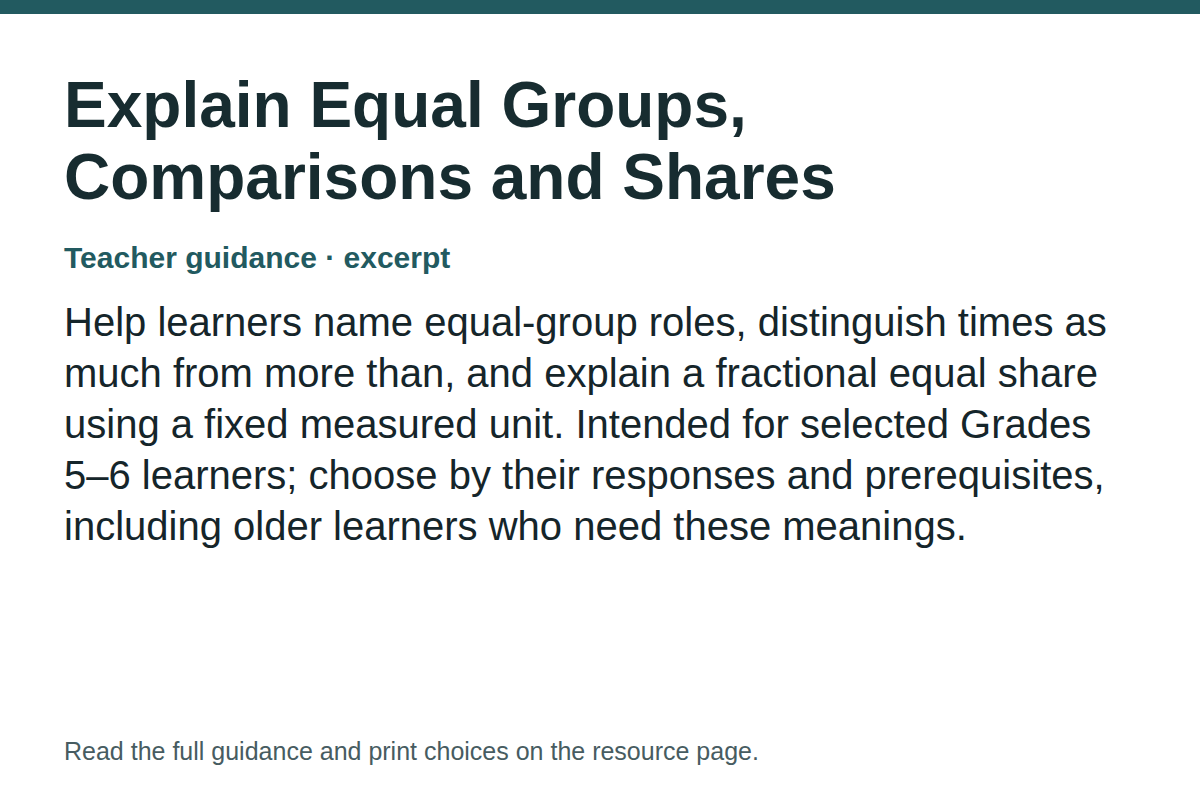
Equal Groups and Equal Shares: Before Ratios

Visual models, guided practice, separate checks and focused next tasks for quantity meanings.

Explore collection

For middle-school civics

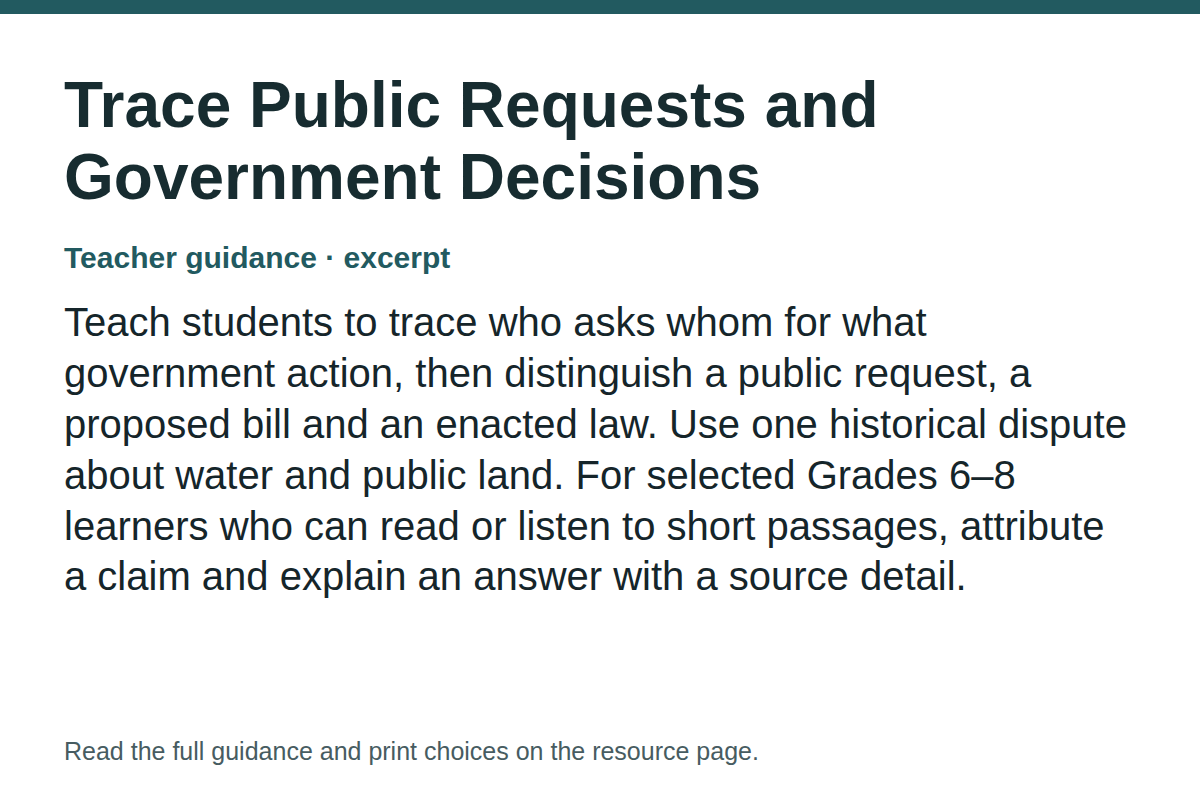
Hetch Hetchy Civic Inquiry

Authentic requests, a proposed bill and an approved Act with complete practice and next teaching.

Explore collection

For Grade 6 reading

Central Ideas and Summaries: Teach, Check and Respond

First teaching, complete focused summary practice and different later checks.

Explore collection

For selected Grade 7 mathematics

Proportional Relationships: From Ratios to Models

From paired-ratio foundations to whole-relationship tests, response teaching, different checks and transfer.

Explore collection

For selected Grade 8 mathematics

Linear Relationships: Rate and Initial Value

Find rate and initial value, compare models, then respond, recheck and transfer.

Explore collection

Not sure where to start?

Try a focused reading check, examine the response, then choose a lesson on evidence, inference, or summary. Treat each check as one piece of classroom evidence—not a reading-level diagnosis.

Explore the reading checks ↗

Know what you’re using.

About the materials

Open a resource page for the student materials, separate teacher guidance, estimated time and adaptation notes.

Teaching materials preview
Audience
Activity or use time
Preparation
Available files

Share this resource view

Report a resource issue · Open an issue email

Do not include student names or identifiable work in an issue report. Page revision: 6 October 2026; classroom files retain their own editions.