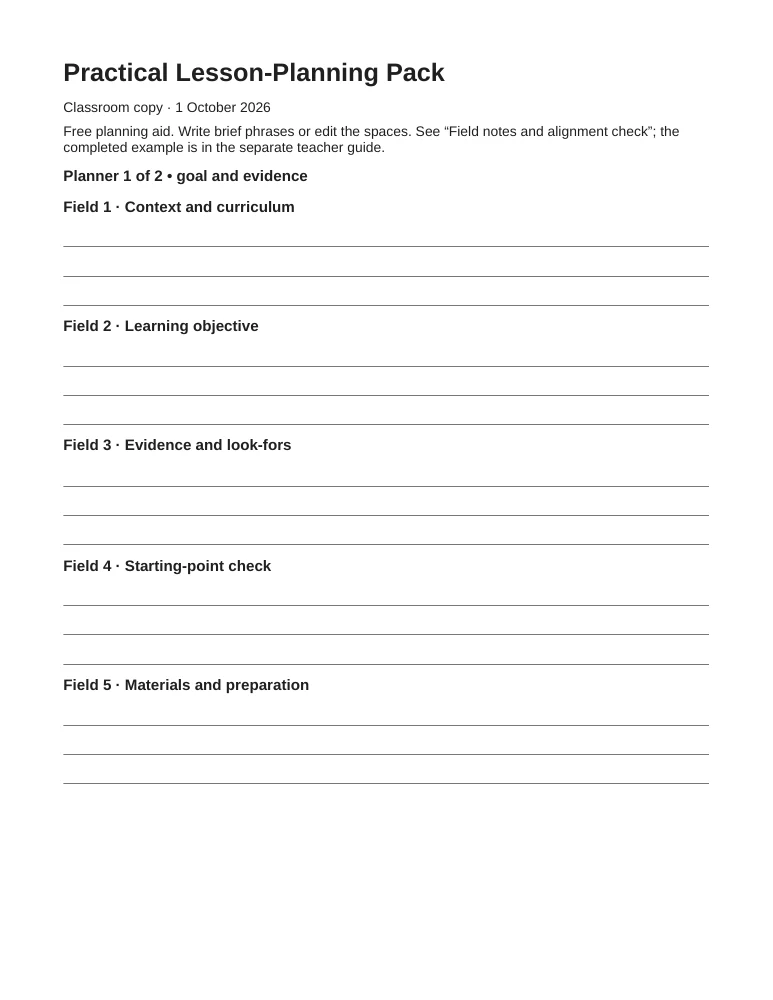
Teacher planning · Blank pages + worked example
A place to put your next lesson together.
Connect your objective, teaching sequence and evidence of learning with the Practical Lesson-Planning Pack.
Printable PDF · Editable Word · Browser copy
For the everyday work of teaching
A lesson to plan. A learner to support. A fresh way in. Find practical teaching guides and free resources for your next step.
Free downloads. No sign-up. Make them your own.
Start with tomorrow
One clear objective.
A plan to build on.
What’s on your list?Start where you are.
A few useful things to start with
Take a look inside. Choose a resource, open the teacher guidance, and print or adapt the pages you need.
Teacher planning · Blank pages + worked example
Connect your objective, teaching sequence and evidence of learning with the Practical Lesson-Planning Pack.
Printable PDF · Editable Word · Browser copy
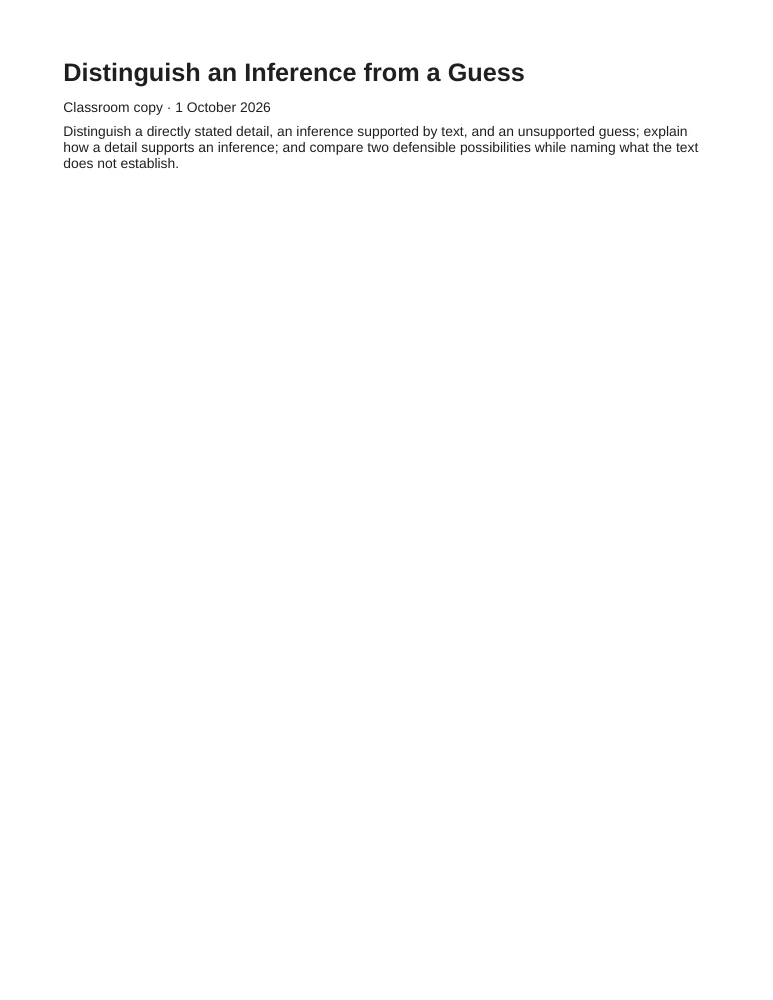
Grade 6 · Reading & evidence
Help students connect a claim to the words on the page. Includes separate teacher guidance and answers.
Student pages · Teacher guide · Editable files
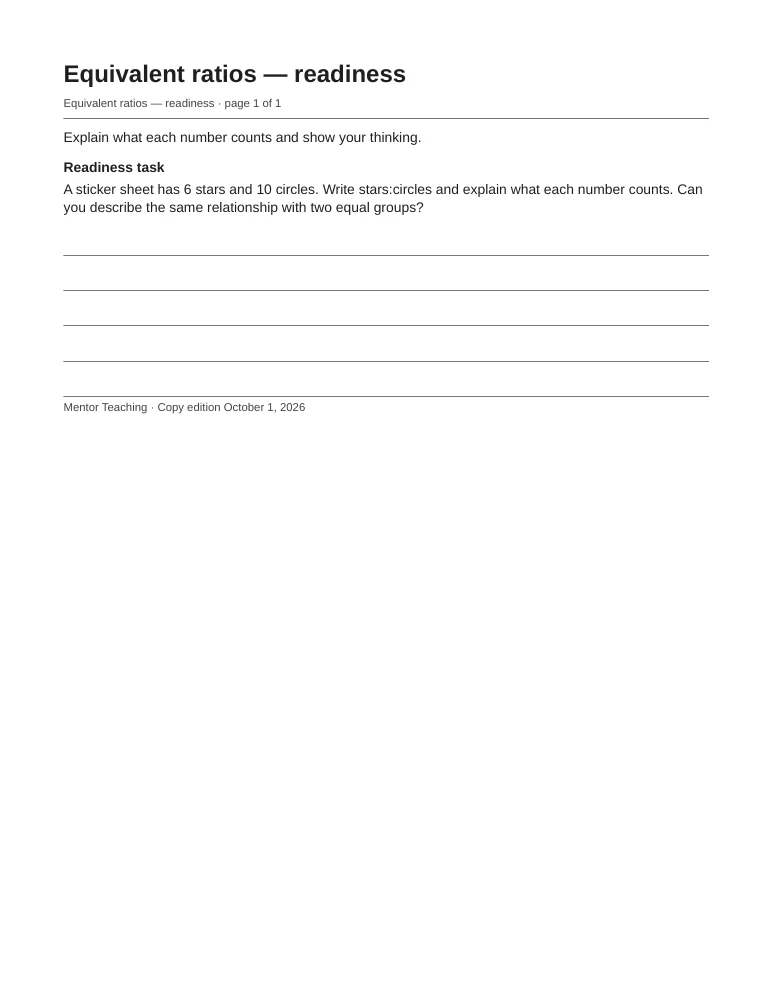
Grade 6 · Mathematics
Start with a readiness task, then explore equivalent ratios by scaling both quantities.
Readiness check · Lesson · Teacher guide
From a good idea to a usable lesson
You don’t need a perfect plan. Start with what students will do, how you’ll support them, and what their work will tell you.
Build a plan ↗Choose an objective that says what students will do, not just what you’ll cover.
Connect your model, guided practice and independent task. Plan the access supports.
Decide what you’ll look for in student work and how it will shape the next lesson.
Featured teaching guides
Explore the question in front of you, with practical examples and tools you can come back to.
Browse the teaching library
Every classroom is different. Our guides bring together practical steps, examples and sources so you can choose what fits your learners.