
Inclusion and Accessibility
Culturally Responsive Lesson Plans: Sources, Representation, and Access
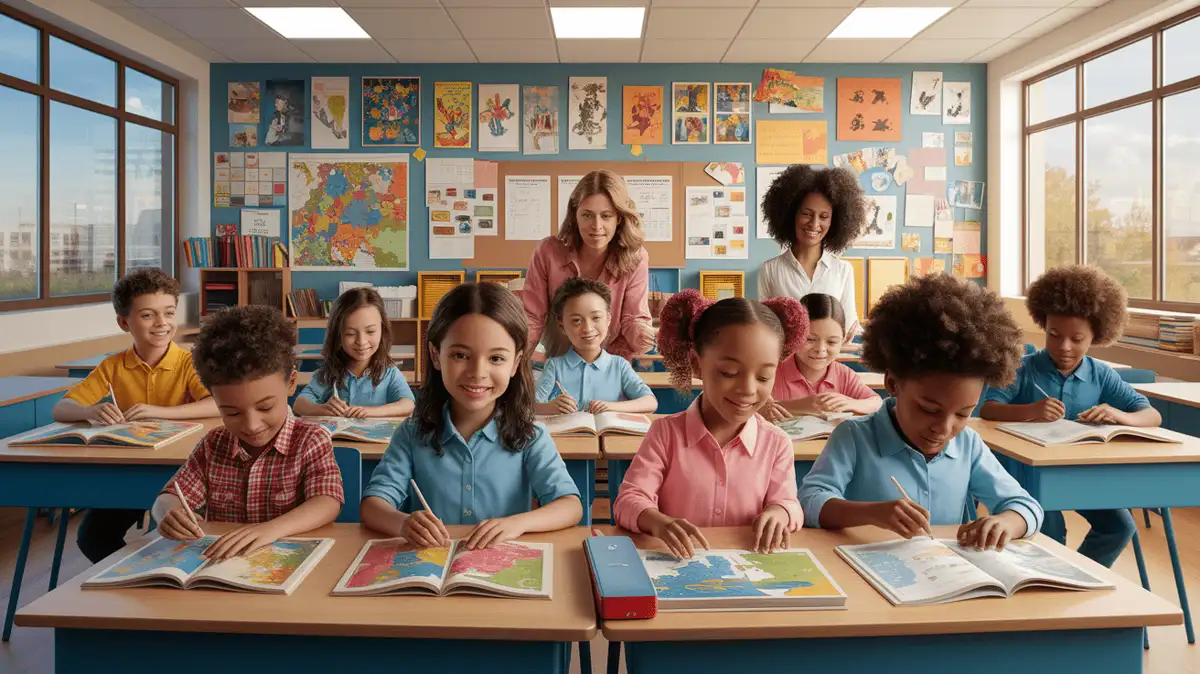
Culturally Responsive Planning: Scope and Purpose
Culturally responsive planning examines how curriculum, examples, participation rules, language, identity, and power affect access to the stated learning goal. It depends on listening and evidence, not assumptions about a student or group.
Culturally responsive education connects rigorous subject learning with attention to students' cultural knowledge and the context in which curriculum is taught. No single strategy represents every learner or guarantees engagement.
In practice, lesson planners review curriculum, examples, language, participation, and representation in relation to a defined learning objective. The guide to an effective lesson plan provides a general structure; reliable sources and voluntary input should establish cultural relevance, not claims about reaching learners’ hearts or minds.
Examine whose sources and perspectives the lesson represents and which participation routes it permits. Invite optional contributions without treating students’ customs as tools, assigning fixed “cultural displays of learning,” or predicting engagement or retention.
Building Cultural Awareness: Getting to Know Your Students
Learn about students through voluntary, respectful communication and existing school processes; do not ask students to represent a group or infer identity from appearance, name, language, or family background.
Core Principles That Guide Us
Use the following principles to review curriculum, participation, and evidence:
- Student-centered evidence: Treat students’ languages, experiences, and community knowledge as potential resources when they are relevant and voluntarily shared. Do not assume that a background is a barrier or a bridge to deeper learning.
- Reviewing Cultural Representation: Check materials, examples, language, and participation structures for stereotypes, omissions, inaccurate representation, and barriers unrelated to the objective. Do not assign a tradition, language, or perspective to an individual student.
- Critical analysis: When it fits the curriculum, teach students to examine sources, perspectives, and power claims using evidence. Do not require personal political disclosure or promise that the lesson will turn students into change agents.
An “All About Me” activity should use voluntary, bounded prompts and offer fictional, interest-based, or task-based alternatives. It should not require students to disclose identity, family history, home circumstances, or personal experiences, and it does not automatically produce self-discovery or community.
Getting to Know Your Cultural Landscape
Begin with accurate curriculum sources and voluntary communication rather than requiring cultural exchange. The following options need a stated purpose, privacy limits, and a non-disclosure route:
- Family partnership questions: Ask only information needed for a defined instructional or access decision, use approved communication channels, explain how the response will be used, and make questions about home traditions, language, or celebrations optional.
- Student voice discussions: Use voluntary participation and a neutral alternative. Do not require students to share cultural practices, family stories, identity, or community experiences in front of peers.
- Cultural asset mapping: Learn through voluntary, respectful communication and existing school processes; do not catalogue identity, ask students to represent a group, or infer knowledge from appearance, name, language, or family background.
Review culturally responsive practice over time and build relationships with students and families through voluntary, respectful communication.
Strategies for Culturally Responsive Lesson Design
Connect culturally responsive review to curriculum, instruction, access, and academic evidence through these strategies:
Reviewing Cultural Representation in Curriculum Design
Use the following practices to integrate cultural diversity into curriculum design:
- Diverse Texts and Resources: Select materials that reflect your students' backgrounds as well as global cultures. Include literature, historical accounts, and scientific contributions from various cultural contexts.
- Relevant Project-Based Learning: Connect a task to a verified local issue or to student interests gathered voluntarily, while preserving the disciplinary objective. Check relevance with students rather than assuming a community context makes learning meaningful or applicable.
- Anti-Bias Frameworks: Regularly analyze your content for stereotypes and check that lessons align with equity goals.
Instructional techniques to evaluate
Select instructional strategies that provide clear modeling, guided practice, multiple representations, and needed access supports without assigning preferences, abilities, or viewpoints to a cultural group:
- Inquiry-Based Learning: Frame a lesson around a question supported by the curriculum, reliable sources, and voluntary student input. Inquiry does not automatically make a task asset-based or culturally responsive.
- Peer Collaboration: Use group tasks, discussions, or seminars with clear evidence criteria and accessible participation routes. Do not require cultural exchange or personal identity disclosure as the price of participation.
- Differentiated Instruction: Adapt modeling, practice, examples, language support, and response formats to the objective, observed evidence, and required accommodations. Do not assign learning preferences or communication styles to a cultural group.
Supporting English Language Learners
For multilingual learners, align instruction with the applicable content and English-language-development standards while maintaining access to grade- or course-level learning. The guide to integrating ELD standards can support planning; do not treat language status as a cultural profile or claim that one approach validates identity.
Examples of Culturally Relevant Activities
These subject examples show how to keep cultural relevance specific and well sourced:
- Mathematics: Study a named art pattern, game, or community problem only with reliable information about its source and context. Do not present a practice as representative of an entire culture.
- Science: Investigate a defined local environmental question or study knowledge from a named community using credible sources, appropriate attribution, and permission where required. Do not treat “traditional ecological knowledge” as a generic classroom resource.
- Language Arts: Include diverse authors, oral storytelling traditions, and multilingual poetry
- Social Studies: Center multiple perspectives on historical events and include local community history
Assessment and Reflection: Closing the Equity Loop
Culturally responsive assessment still requires a defined construct, valid evidence, consistent criteria, required access supports, and review for construct-irrelevant demands. It should not be described as categorically different from all traditional assessment.
Culturally Responsive Assessment Strategies
Use these assessment practices when they preserve the intended construct and criteria:
- Compatible evidence formats: Use oral, written, visual, artistic, or collaborative formats only when they preserve the intended construct and criteria. Do not assign a format because it is presumed to match a student’s culture or a broad “way of knowing.”
- Portfolio-Based Assessment: Let students select from approved evidence formats that fit the learning target and privacy rules. Evaluate the stated criteria rather than claiming that a format reflects a student’s cultural strengths.
- Optional Reflection and Goal Setting: Ask students to reflect on the task, sources, strategies, or next step. Do not require them to assess their identity, values, or “cultural learning.”
Continuous Improvement Through Reflection
Use regular reflection to examine whose perspectives, examples, and participation routes the lesson includes. Record a specific change and review its effects in later student work or feedback:
- Which perspectives or sources are absent, inaccurate, tokenized, or stereotyped in this lesson?
- Which observable access or participation barrier should I address, and when does the concern require coordination with qualified student-support staff?
- Where do I need additional professional development for culturally responsive teaching?
Addressing Implementation Challenges
Common implementation challenges include:
- Tokenistic Inclusion: Adding cultural elements superficially without meaningful curricular reform
- Resource Gaps: Limited access to diverse materials or funding for CRT-aligned programs
- Cultural Competence Development: Teachers need ongoing training and self-awareness
Review one bounded change at a time, compare the resulting student evidence with the learning objective, and record limitations before extending the approach.
Review and Next Steps
Review the curriculum, listen respectfully, attend to power and representation, and check whether the lesson supports the stated disciplinary objective.
Use the following checks to keep intended benefits tied to observable evidence:
- Engagement claim: Check whether a change improves access to the task and the quality of student evidence. Do not assume cultural relevance automatically increases motivation or achievement.
- Academic evidence: Compare participation and the quality of student work before and after a change; do not assume cultural relevance automatically raises achievement.
- Social-emotional limits: Respectful representation may support belonging, but it does not establish resilience or self-esteem gains; provide voluntary participation and appropriate support routes.
Choose one defined curriculum, participation, or access question. Test a bounded change, examine student evidence, invite voluntary feedback, and revise without claiming that one template produces equity or engagement.
Your Action Plan
Start with the following bounded actions:
- Audit your current curriculum and improve your lesson planning process to include culturally responsive elements.
- Build relationships through voluntary, respectful communication with students and families; ask only what the instructional purpose requires, and do not catalogue or infer cultural assets.
- Seek professional development focused on diversity, equity, and inclusion (DEI).
- Connect with community organizations to ground your lessons in authentic, local contexts.
- Reflect on a specific lesson, record one finding supported by student work or access evidence, and identify a bounded revision.
Culturally responsive planning requires accurate sources, attention to power and representation, required access supports, and evidence tied to the disciplinary objective. It cannot guarantee academic success for every student or a particular relationship to cultural identity.
Start with one lesson, identify one unsupported assumption or representation gap, make a bounded revision, and compare student access and work before and after the change.
Classroom resources for this teaching goal
- Read Maps and Explain Change with Evidence — For a separate middle-school source-reading example, use these supplied records and examine their perspective limits. Choose verified additional sources for the community perspectives your lesson needs.
- Trace Public Requests and Government Decisions — For a separate middle-school source-reading example, use these supplied records and examine their perspective limits. Choose verified additional sources for the community perspectives your lesson needs.
Blank source-and-participation audit
Lesson and objective:
Source, creator, date, and purpose:
Claim about a community or experience:
Evidence for the claim and uncertainty to state:
Whose perspective is present or absent:
Student action or response:
Participation choices and private route:
Language and document access:
Assessment evidence:
Adjustment after reviewing student work:
Completed bounded example: revising one local-history source comparison
Objective and materials: Students compare how two traceable public sources describe one local land-use decision. Materials include the two source excerpts, creator/date/purpose notes, an accessible comparison organizer, and the approved response tools.
Student action: Students identify each source’s claim, cite one detail, compare one difference in perspective, and state one question the set cannot answer. They may respond in writing or an approved equivalent mode and are not asked to represent a community or disclose personal identity.
Evidence and adjustment: The teacher reviews source attribution, cited details, comparison, and qualification. If students make broad claims from one excerpt, the next model narrows a claim to the supplied evidence; if attribution is missing, the teacher models creator and purpose before another comparison. The example does not assert that the two sources represent every relevant perspective.
Tools in this guide: Review a lesson with a copyable audit and a completed example grounded in named sources, including student actions and possible adjustments.