Teaching need

Subject-Specific Teaching

Find classroom planning ideas for literacy, mathematics, science, social studies, and interdisciplinary learning.

Search the full library

Choose a route

Use the question that best matches the decision in front of you; the labels and filters below narrow the library without implying that one method fits every context.

Suggested starting sequence

  1. Teaching Scientific Literacy: Questions, Evidence, Models, and Uncertainty

    Begin with scientific literacy by connecting questions, evidence, models, uncertainty, and source evaluation.

  2. Media Literacy in K–12: Sources, Claims, and Verification

    Teach students to examine media authorship, claims, evidence, representation, and verification.

  3. Ethical Dilemmas in Social Studies: Source-Based Discussion Guide

    Use a source-based social-studies dilemma with participation safeguards and evidence criteria.

Recent hub updates

Updated July 19, 2026: added a decision aid, starting sequence, resource filters, preparation labels, and a subtopic map.

Recently expanded guides:

8 resources

Illustration for Arguing with Evidence: A Practical Guide to Teaching Academic Argumentation

Subject-Specific Teaching · Instructional guide · 25–35 minutes

Arguing with Evidence: A Practical Guide to Teaching Academic Argumentation

Teach academic argumentation through claim, evidence, reasoning, source evaluation, counterargument, discussion norms, scaffolds, and criterion-based feedback.

Best for: Teachers planning evidence-based argument

Next action: Choose one source-based question and write the claim, evidence, counterargument, and scoring criteria students must address.

Discussion and collaboration

Illustration for Ethical Dilemmas in Social Studies: Source-Based Discussion Guide

Subject-Specific Teaching · Discussion guide and lesson example · 30–45 minutes

Ethical Dilemmas in Social Studies: Source-Based Discussion Guide

Plan an age-appropriate, source-based dilemma without false equivalence, forced disclosure, trauma simulation, or grading students for their personal beliefs.

Best for: Middle and secondary social studies

Next action: Choose one dilemma, remove any forced personal disclosure or trauma simulation, and write the evidence criteria before planning the discussion.

Discussion and collaboration

Illustration for Media Literacy in K–12: Sources, Claims, and Verification

Subject-Specific Teaching · K–12 planning guide · 25 minutes

Media Literacy in K–12: Sources, Claims, and Verification

Plan age-appropriate media literacy around authorship, purpose, evidence, representation, verification, algorithms, and creation with privacy and disclosure limits.

Best for: Teachers adding media analysis to a lesson

Next action: Choose one media item and write the source, claim, evidence, representation, and verification questions students will answer.

Subject teaching

Illustration for Phonological Awareness Activities: Sound Games for Early Learners

Subject-Specific Teaching · Activity sequence · 15–25 minutes

Phonological Awareness Activities: Sound Games for Early Learners

Use a clear oral-language sequence for rhyme, syllables, onset–rime, and phoneme work, with short sound games and an observable response at each step.

Best for: Preschool and early-primary literacy teachers

Next action: Choose the next sound skill in the sequence and prepare three oral examples plus one response every child can make.

Subject teaching

Illustration for Reading Workshops: Structure, Conferring, and Evidence

Subject-Specific Teaching · Workshop planning guide · 30 minutes

Reading Workshops: Structure, Conferring, and Evidence

Plan a reading workshop with a concise mini-lesson, sustained reading, teacher conferences, accessible text choices, response evidence, and predictable routines.

Best for: Elementary and middle-grade reading teachers

Next action: Set the workshop’s reading objective, mini-lesson time, independent evidence, and conference focus before choosing texts.

Subject teaching

Illustration for Social Studies Simulations and Role-Play: Sources, Safety, and Debriefing

Subject-Specific Teaching · Simulation review guide · 30 minutes

Social Studies Simulations and Role-Play: Sources, Safety, and Debriefing

Review a social-studies simulation for historical evidence, learning purpose, assigned power, identity risk, opt-out routes, debriefing, and safer alternatives.

Best for: Social studies teachers evaluating role-play

Next action: Take one planned role-play and remove any forced identity, trauma, oppression, or personal disclosure before writing the evidence and debrief.

Subject teaching

Illustration for Teaching Scientific Literacy: Questions, Evidence, Models, and Uncertainty

Subject-Specific Teaching · Instructional guide · 25–35 minutes

Teaching Scientific Literacy: Questions, Evidence, Models, and Uncertainty

Teach scientific literacy by connecting questions, evidence, models, uncertainty, source evaluation, disciplinary language, and claims students can explain.

Best for: Science teachers planning evidence-based literacy

Next action: Select one scientific claim and prepare the data, model, uncertainty, and source questions students must use to evaluate it.

Subject teaching

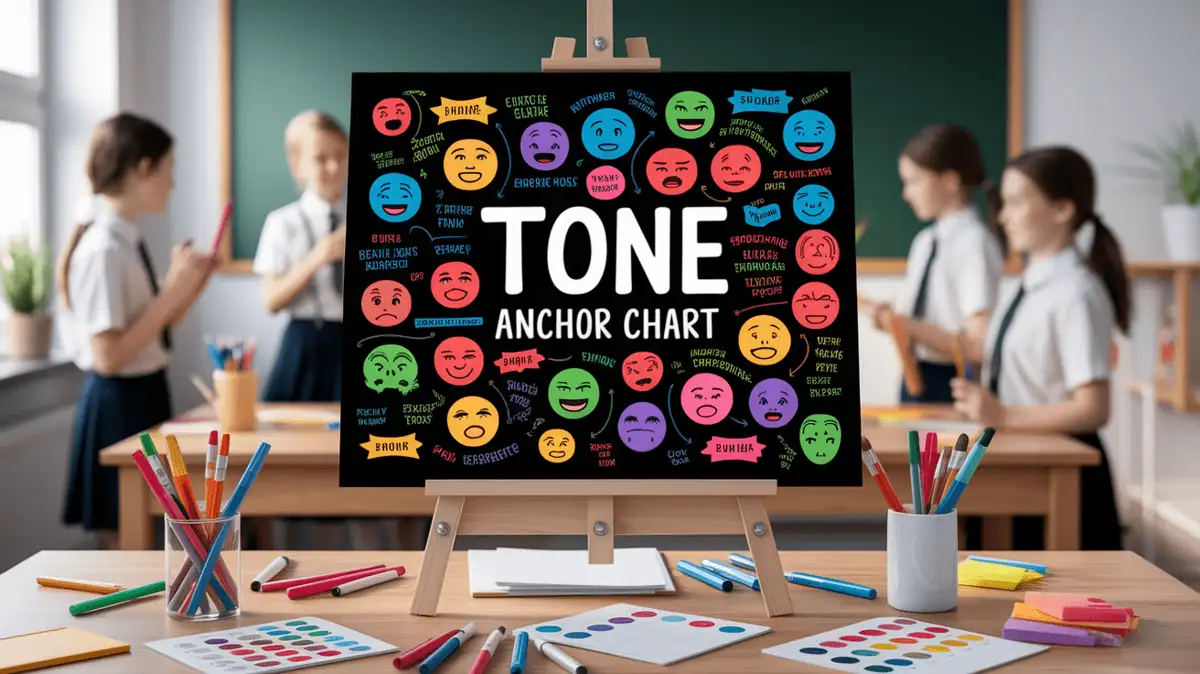
Illustration for Tone Anchor Chart: Quick Reference and Creation Guide

Subject-Specific Teaching · Reference and creation guide · 20–30 minutes

Tone Anchor Chart: Quick Reference and Creation Guide

Create a tone anchor chart with precise terms, evidence from text, related and contrasting words, a student-use routine, and a plan for revision or retirement.

Best for: Language arts teachers building a tone reference

Next action: Choose four tone words, add one cited example and contrast for each, and write the question students will use with the chart.

Subject teaching