
Objectives and Standards
STEM Lesson Planning: Objectives, Constraints, Safety, and Evidence
Also in: Subject-Specific Teaching
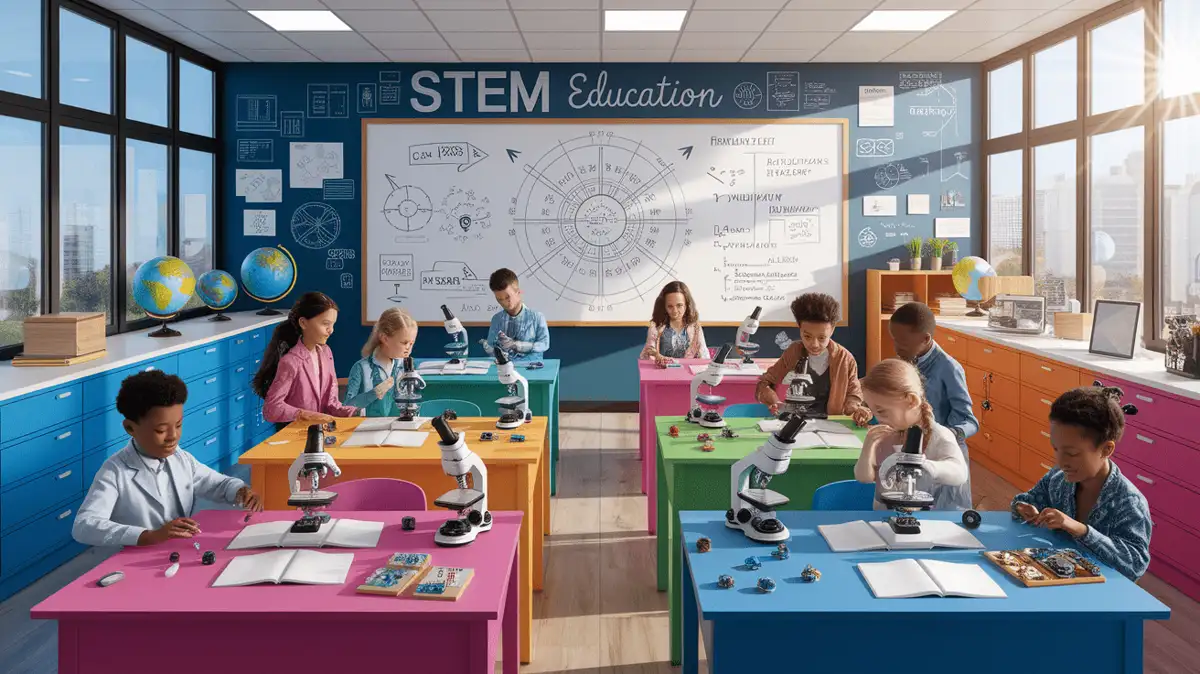
A STEM lesson should identify the disciplinary objective, problem or design decision, constraints, materials, safety checks, evidence, and revision process. It need not force all four STEM fields into every task.
When the general planning structure needs clarification, review the fundamentals of writing effective lesson plans.
Define the STEM task and evidence
STEM lesson planning connects selected science, technology, engineering, or mathematics practices around a defined problem or design decision. Name each disciplinary objective and the evidence students will produce rather than assuming every task must integrate all four fields.
A STEM lesson plan should name the disciplinary objective, the problem or question, available evidence, constraints, model or investigation, safety and access requirements, and the response each student will produce. Project-based work is one possible structure; choose it only when the project tasks require the intended science, technology, engineering, or mathematics evidence.
Define Clear Learning Objectives
Write an observable objective and define the evidence students must produce before selecting materials or a design challenge.
Align the observable learning objective with applicable curriculum standards, such as the Next Generation Science Standards (NGSS) or Common Core mathematics standards. Identify the disciplinary contribution required by the task rather than assuming every lesson must address each STEM field. For example:
- Science: Will students explain a force’s effect on the design using a labeled model and observations?
- Technology: Will students use a digital tool to research or present their findings?
- Engineering: Will students apply the engineering design process to build a functional prototype?
- Math: Will students use measurements and data analysis to optimize their design?
Decide how many standards to focus on by considering lesson time, objective scope, and the evidence students can produce. Select standards before choosing activities, materials, and assessments.
Design Hands-On Activities
Use hands-on exploration when it elicits the evidence required by the STEM or STEAM objective. Define the challenge, constraints, materials, safety checks, supports, and revision criteria. Treat unsuccessful trials as evidence to analyze, not as proof that learning occurred.
Embrace the Engineering Design Process
An engineering design process can organize a classroom task into a problem, criteria and constraints, research, proposed designs, testing, evidence-based revision, and communication. Adapt the sequence to the discipline, grade, safety requirements, time, and available materials; no one version is suitable for every classroom task.
- Ask: Identify the problem and constraints.
- Imagine: Brainstorm potential solutions.
- Plan: Choose a solution and draw or diagram it.
- Create: Build a prototype.
- Improve: Test the prototype and revise it based on the evidence.
The engineering design process can organize iterative planning and testing. It does not by itself establish critical thinking, resilience, creativity, or learning.
Planning Project-Based STEM Tasks
Frame a STEM challenge around a defined problem and constraints. For example, instead of asking students only to build a bridge, ask them to design a bridge for a stated use with specified materials. Assess the design against the objective and constraints rather than assuming the context will interest every student.
Making it Inclusive for All Learners
Inclusive STEM planning checks the task’s access barriers, required individual supports, and routes for producing the disciplinary evidence. This involves:
- Differentiation: Plan multiple entry points, supports, and extension routes while keeping the intended STEM reasoning visible.
- Collaboration: Structure activities around task-relevant roles such as Materials Manager, Lead Builder, or Recorder. Explain each role, rotate access where appropriate, permit an alternative when needed, and review actual participation rather than assuming that role assignment ensures it.
- Context: Use a relevant problem when it clarifies the STEM decision; provide enough background knowledge and avoid assuming one context is meaningful to every learner.
Sequence Lessons for Coherent Learning
Sequence tasks when later reasoning depends on knowledge or evidence developed earlier; select a framework only when it fits the disciplinary objective.
The 5E Learning Cycle Framework is one structure for sequencing inquiry-based instruction:
- Engage: Present the problem, question, or demonstration and collect a brief response that shows relevant prior knowledge or an initial prediction.
- Explore: Students investigate, build, or test under defined material, safety, and recording procedures.
- Explain: Ask students to interpret their observations, then model the academic vocabulary and disciplinary concept needed to revise or extend the explanation.
- Elaborate: Use a new but related situation and assess whether students apply the named concept under the new conditions.
- Evaluate: Review evidence during each phase and from the final response against the objective and criteria.
A timeline can show the planned sequence, materials, checkpoints, and decision dates. Revise it when student evidence, access needs, safety requirements, or available time changes the plan.
Integrate Assessment and Reflection
Assess the disciplinary objective with evidence collected during the task and from the final response. Observe defined actions, ask questions tied to the criteria, review calculations or models, and record the revision each student makes.
Observing the Process
Assess the evidence named in the objective, not a broad trait inferred from one activity. A rubric can record specific contributions, design decisions, questions, test results, and revisions alongside the final product.
Encouraging Student Reflection
Schedule a brief reflection when it supplies evidence for a defined objective or next design decision. Permit an accessible response format and ask questions tied to the process evidence, such as:
- What was the biggest challenge you faced today, and how did your team overcome it?
- If you could rebuild your prototype, what would you do differently and why?
- What role did you play in your team, and what is one thing you did well?
For collaboration reflection, ask students to cite one task-specific action, its effect on the group product, and one next adjustment. Review that evidence without inferring general social-emotional or academic skill growth from the reflection itself.
Review the STEM Plan
STEM lesson planning can use real-world problems and frameworks such as the engineering design process when they clarify the disciplinary objective. Check whether students produce the intended science, technology, engineering, or mathematics evidence; do not predict lasting interest.
Before teaching the lesson, review these planning checks:
- Start with a "Why": Anchor your lesson in a compelling, real-world problem or question.
- Be Goal-Oriented: Set clear learning objectives so you and your students know what the task requires.
- Embrace the Process: Use the engineering design process to organize hands-on, project-based STEM activities.
- Plan for identified access needs: Build required accommodations and relevant differentiation into the task, define each student’s evidence route, and review individual work rather than assuming that differentiation or collaboration ensures success.
- Assess the stated evidence: Review the final product together with defined process evidence such as a constraint-based decision, test result, revision, or documented contribution. Do not infer a general collaboration, problem-solving, or resilience trait from one project.
Pilot the task, record safety and access issues, and revise the evidence requirements before broader use.
Worked example: design a paper bridge to a measurable constraint
Hypothetical planning example. The completed fields, observations, and results are constructed for illustration and do not report a classroom or workplace trial.
Inputs: Grade 7 teams receive two sheets of paper, 30 centimeters of tape, a 30-centimeter span, and teacher-approved test masses. The design criterion is to support 500 grams across the span under the stated material and supervised safety constraints. The science objective is to explain how load changes the structure; the mathematics objective is to use a data table and calculate the change between trials.
Steps: Teams sketch and label a design, predict a failure point, build under the material limit, test in 100-gram increments behind a safety line, record results, and revise one feature before a second test.
Decision: One bridge holds 300 grams rather than the 500-gram criterion, and the team’s table skips the 200-gram result, so the design and evidence record both require revision.
Response: The team adds a folded beam, reconstructs the missing trial from a supervised retest rather than guessing, and explains the change using both force and measurement evidence. The teacher scores the stated objectives, not the bridge’s appearance.
Classroom resources for this teaching goal
- Choose, Test & Improve a Thermal Protector — For Grade 6 design reasoning, evaluate every criterion, propose an improvement and reconsider it against supplied fictional results. Data analysis does not establish physical construction or testing.
- Cool-Water Design Investigation — For an optional Grade 6 cool-water comparison, review the equipment, supervision and setup guide first. A complete supplied-data alternative is included.
- Thermal Energy Session Routes — Select six supplied-data sessions or the longer route with practical continuation points. Use the prerequisites and prior evidence named for each session.
- Start Here: Thermal Energy Evidence Kits — Choose a Grade 6 thermal-energy teaching sequence, check prerequisites and select the student pages for each occasion. The guide distinguishes supplied-data work from the optional practical route.