
Inclusion and Accessibility
Safe and Inclusive Science Labs: Hazards, Access, Supervision, and Alternatives
Also in: Subject-Specific Teaching
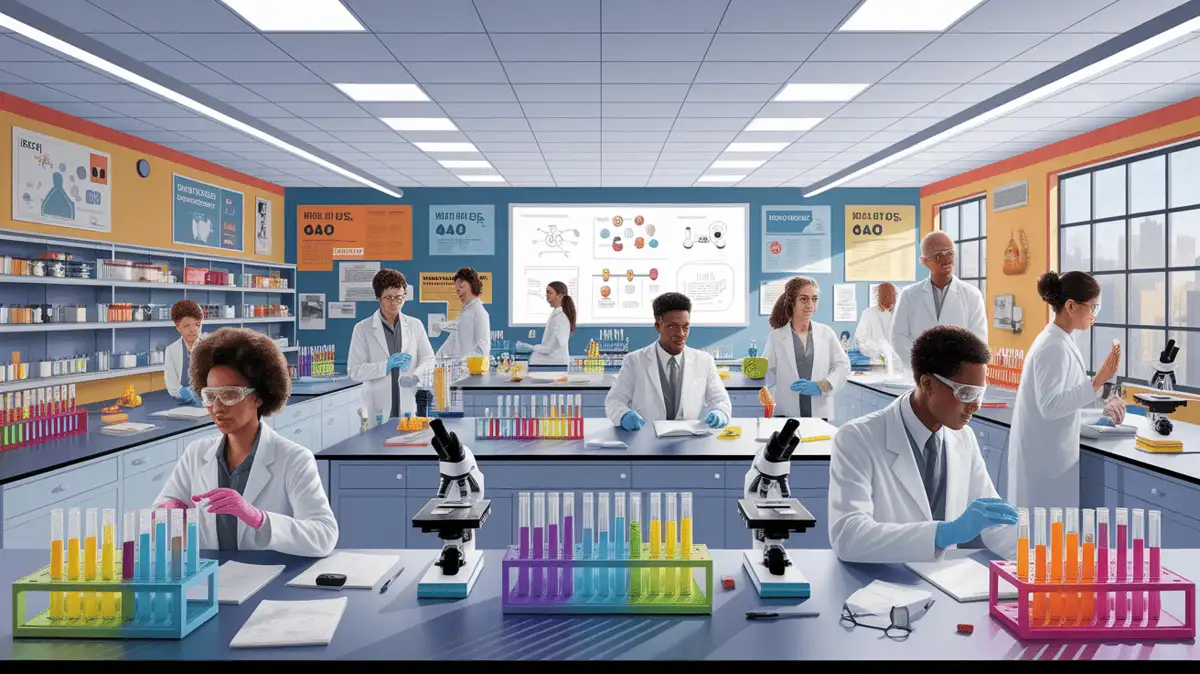
Scope: hazard control and identified access needs
A science lab requires hazard-specific controls and review of identified access barriers. The linked accessibility checklist can inform that review, but only qualified safety, facilities, disability-access, and instructional staff can determine whether a particular procedure and space are usable. Do not promise safety, barrier-free participation, belonging, or equity for every user.
Building a Safety Foundation
Laboratory safety depends on hazard-specific procedures, clear signage, accessible safety data sheets, adequate ventilation, and emergency equipment. Teach each person the emergency actions appropriate to their role. Students should follow local procedures for alerting staff, evacuating, and using eyewash stations or fire equipment only when training and policy permit. Review workstations and routes for identified access barriers without claiming that one setup protects all users.
- Complete a procedure-specific hazard and access assessment with qualified staff and the affected learner's documented requirements before participation.
- Select required PPE with qualified safety and disability-access staff, verify fit and compatibility with the hazard, and redesign or replace the procedure when suitable protection is unavailable.
- Have qualified facilities and safety staff verify compliant routes, alarms, exits, eyewash and shower access, shutoffs, and assistance procedures for identified users; no arrangement is reachable or usable for every ability.
Plan participation and access
Use clear modeling, guided practice, accessible communication routes, required accommodations, and conduct rules alongside physical hazard controls. The linked lab-design article offers design considerations, but it is not a legal determination or a substitute for current codes, individualized plans, or review by qualified facilities, safety, and disability-access staff.
State and enforce anti-harassment rules, use stated names and pronouns, protect privacy, avoid assumptions about finances or family support, and provide a private, accessible way to report a barrier or hazard. Do not require identity disclosure or assume that feeling valued will cause students to report a safety concern.
Training and Education for All
The linked lab-access resource suggests accessible demonstrations, guides, and technology. Each participant must receive required accommodations and demonstrate the safety knowledge and procedure specified by qualified staff before hazardous work; flexible pacing cannot override supervision, competency, or emergency-readiness requirements.
- Provide accurate, accessible safety information through qualified translation, interpretation, captioning, tactile, visual, or other approved formats, and verify understanding of the required action.
- Schedule hazard- and role-specific refreshers, implement documented accommodations, and require each participant to demonstrate the necessary safety action without assigning a presumed learning need or style.
- Use only approved drills planned with qualified safety and disability-access staff; preview the procedure, provide required accommodations and an equivalent route where possible, and never expose participants to the actual hazard for practice.
Apply current policies, standards, and individualized requirements
Policies should address accessibility alongside hazard controls. Use the accessible labs guide to review routes, workstations, equipment, and instruction for identified barriers. Applicable safety requirements and individualized accommodations still control; no design can ensure equal protection in every situation.
Qualified safety, facilities, disability-access, and instructional staff should determine whether an accommodation preserves required hazard controls and the learning objective. If it does not, redesign or replace the procedure; a policy cannot guarantee full participation in every laboratory task.
Designing Accessible Lab Spaces
- Have qualified facilities and disability-access staff verify current code-compliant route widths, turning space, work zones, and emergency egress for the actual room and users; do not rely on a generic minimum.
- Have qualified facilities and safety staff verify location, approach, activation, flow, inspection, and assistance procedures for emergency showers and eyewash stations before the lab is used.
- Provide workstations that accommodate left- and right-handed use
Maintaining Continuous Improvement
Schedule qualified safety inspections and an accessible, private route for users to report hazards or barriers. The linked article on a DEI-focused laboratory program describes one initiative; it does not establish outcomes for other labs or replace current safety, facilities, and disability-access review.
Track inspection findings, reported barriers, incidents, corrective actions, responsible staff, and review dates. Reassess procedures when hazards, equipment, users, standards, or accommodations change.
Review the next lab procedure
For each planned procedure, document the hazards, controls, responsible staff, required competency, identified access barriers, accommodations, emergency actions, and an alternative when safe participation is not possible. Review the actual environment and outcome rather than promising confidence, innovation, universal participation, community change, or future scientific discovery.
Printable lab procedure checklist
- Procedure: Read every step and identify the material, equipment, quantity, condition, and responsible person.
- Hazards: Record each chemical, biological, physical, electrical, heat, pressure, sharp, and waste hazard identified through the approved process.
- Controls: Confirm the required substitution, engineering control, procedure, protective equipment, supervision, and disposal route.
- Competency: Define what students and staff must demonstrate before practical work begins.
- Access: Inspect reach, grip, vision, hearing, communication, sensory, mobility, and emergency egress needs against identified plans.
- Alternative: Prepare an approved route to the same learning objective when hands-on participation is not safe or accessible.
- Emergency: Verify current local procedures, equipment, contacts, and staff roles in the actual room.
- Authorization: Record who completed the required local review and what must be corrected before the lab proceeds.
Tools in this guide: Use the step-level lab checklist with copy and print controls; local safety review still governs the activity.
Classroom resources for this teaching goal
- Cool-Water Design Investigation — For an optional Grade 6 cool-water comparison, review the equipment, supervision and setup guide first. A complete supplied-data alternative is included.