Teaching need

Lesson Planning Fundamentals

Start with the lesson goal, plan a teachable sequence, and build an adjustment path before class begins.

Search the full library

Choose a route

Use the question that best matches the decision in front of you; the labels and filters below narrow the library without implying that one method fits every context.

Suggested starting sequence

  1. What Is a Lesson Plan? Parts, Template, and Example

    Identify the parts of a usable lesson plan and review the completed example.

  2. How to Write an Effective Lesson Plan: Objective, Model, Practice, and Assessment

    Complete the objective, model, guided practice, and assessment fields in the planning template.

  3. Adapting Lesson Plans Mid-Instruction: Evidence Signals, Supports, and Time-Loss Responses

    Define evidence signals that will trigger support, extension, or a time-loss adjustment during instruction.

Recent hub updates

Updated July 19, 2026: added a decision aid, starting sequence, resource filters, preparation labels, and a subtopic map.

Recently expanded guides:

16 resources

Illustration for 5Ws Lesson Plan Strategy: Modeling, Guided Questions, and Independent Response

Lesson Planning Fundamentals · Lesson strategy guide · 15–25 minutes

5Ws Lesson Plan Strategy: Modeling, Guided Questions, and Independent Response

Use the 5Ws to identify information, expand sentences, check comprehension, and plan writing, with a model, guided questions, and an independent response.

Best for: Elementary literacy and content-area teachers

Next action: Choose one short text and write the five questions plus the final sentence or summary students will produce from their answers.

Planning and design

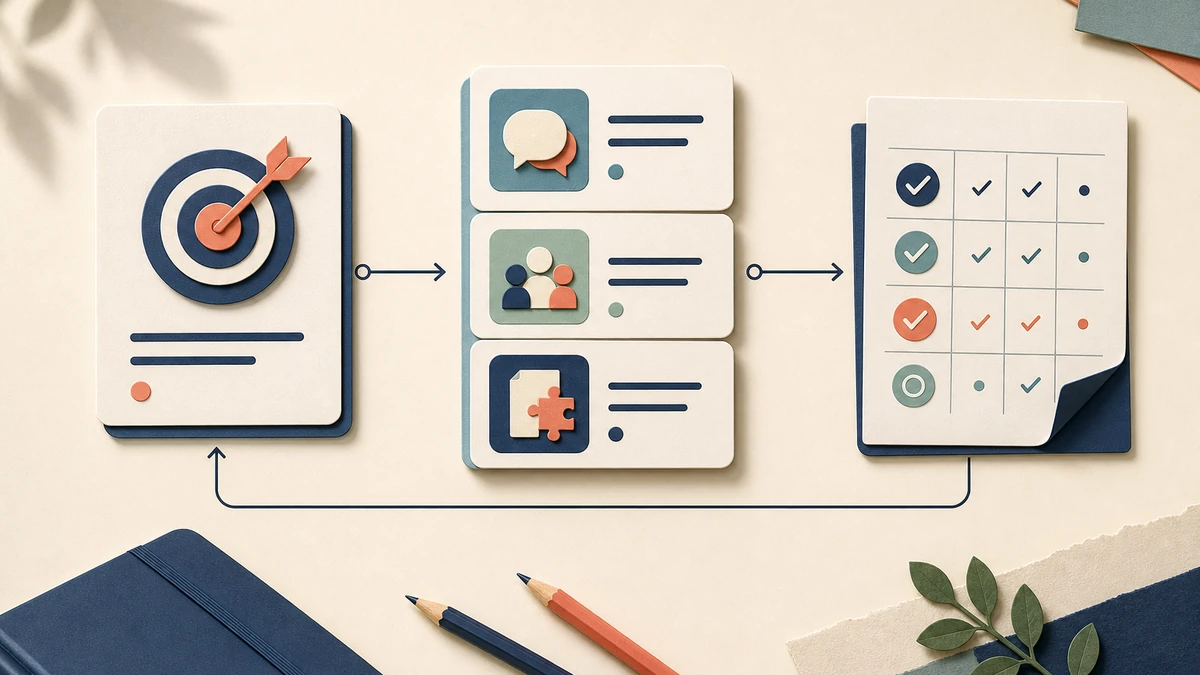
Illustration for Adapting Lesson Plans Mid-Instruction: Evidence Signals, Supports, and Time-Loss Responses

Lesson Planning Fundamentals · Contingency planning guide · 15–20 minutes

Adapting Lesson Plans Mid-Instruction: Evidence Signals, Supports, and Time-Loss Responses

Prepare mid-lesson adaptations by defining the nonnegotiable objective, evidence checks, extension, support, time-loss response, and conditions for each change.

Best for: Teachers planning in-lesson adjustments

Next action: Write the evidence signal that will trigger support, extension, or shortening before teaching the next lesson.

Planning and design

Illustration for All About Me Lesson Plan: Safe Sharing, Choice, and Belonging

Lesson Planning Fundamentals · Lesson example and planning sheet · 25–35 minutes

All About Me Lesson Plan: Safe Sharing, Choice, and Belonging

Use a privacy-aware lesson with optional prompts, grade-band examples, participation alternatives, a planning sheet, and boundaries on personal disclosure.

Best for: Elementary and middle-grade teachers

Next action: Choose the instructional objective, remove any required family or identity disclosure, and offer a fictional or private response option.

Planning and design

Illustration for Backward Design Lesson Planning: UbD Stages and Examples

Lesson Planning Fundamentals · Planning template · 25–40 minutes

Backward Design Lesson Planning: UbD Stages and Examples

Use the three UbD stages to define desired results, acceptable evidence, and learning experiences before selecting activities for a lesson or unit.

Best for: Teachers planning a lesson or unit backward

Next action: Write one desired understanding and its acceptable evidence before adding activities to the unit plan.

Planning and design

Illustration for Brown Bear Lesson Plan: Literacy, Sequencing, and Art Activities

Lesson Planning Fundamentals · Lesson example · 20–30 minutes

Brown Bear Lesson Plan: Literacy, Sequencing, and Art Activities

Select a preschool literacy, sequencing, or art activity connected to the picture book, with materials, a language target, and a quick understanding check.

Best for: Preschool and early-primary teachers

Next action: Choose one activity and write the exact color, sequence, or sound evidence children will show before preparing materials.

Subject teaching

Illustration for Catch a Turkey Lesson Plan for Teachers

Lesson Planning Fundamentals · Lesson example · 25–35 minutes

Catch a Turkey Lesson Plan for Teachers

Select a read-aloud, vocabulary, sequencing, writing, or art activity connected to the picture book, with materials and a clear literacy evidence check.

Best for: Early-primary teachers using the picture book

Next action: Choose one activity and write the exact vocabulary, sequence, or written response students will produce before preparing materials.

Subject teaching

Illustration for Cross-Curricular Lesson Planning Template and Example

Lesson Planning Fundamentals · Planning template · 30–45 minutes

Cross-Curricular Lesson Planning Template and Example

Use a copyable template and complete science–language arts example to align two subject objectives, evidence, modeling, practice, timing, and contingencies.

Best for: Teachers coordinating a two-subject lesson

Next action: Complete both objective and evidence fields before choosing the shared theme, activity, or final product.

Planning and design

Illustration for Direct Instruction in Lesson Plans: Model, Practice, Check

Lesson Planning Fundamentals · Lesson-planning guide · 20–30 minutes

Direct Instruction in Lesson Plans: Model, Practice, Check

Plan explicit instruction through a clear objective, concise model, guided practice, checks for understanding, feedback, independent work, and gradual release.

Best for: Teachers planning explicit instruction

Next action: Choose one skill and write the model, first guided item, understanding check, and condition for moving to independent practice.

Planning and design

Illustration for Exploring the Four Phases of a Lesson Plan

Lesson Planning Fundamentals · Lesson structure overview · 20 minutes

Exploring the Four Phases of a Lesson Plan

Organize a lesson into preparation, instruction, practice, and assessment while keeping objective, materials, procedures, and evidence aligned across phases.

Best for: Teachers organizing a lesson sequence

Next action: Map one upcoming lesson into four phases and check that each phase advances or tests the same objective.

Planning and design

Illustration for Flipped Classroom Lesson Plans: Strategies for Blended Learning Success

Lesson Planning Fundamentals · Blended lesson-planning guide · 30–45 minutes

Flipped Classroom Lesson Plans: Strategies for Blended Learning Success

Plan a flipped lesson with an accessible pre-class task, an in-class application, accountability that does not punish access barriers, and a backup route.

Best for: Teachers moving direct input outside class

Next action: Define the shortest pre-class input students need and prepare an equivalent in-class access route before recording or assigning it.

Planning and design

Illustration for Instructional Strategies in a Lesson Plan: How to Choose Them

Lesson Planning Fundamentals · Strategy selection guide · 15–20 minutes

Instructional Strategies in a Lesson Plan: How to Choose Them

Choose an instructional strategy by the learning goal, starting evidence, teacher model, student practice, access needs, and evidence of the next decision.

Best for: Teachers choosing a lesson method

Next action: Write the objective and evidence first, then select the strategy whose student action directly produces that evidence.

Planning and design

Illustration for Kindergarten Math Lesson Plan: Activities, Structure, and Checks

Lesson Planning Fundamentals · Lesson framework · 25–35 minutes

Kindergarten Math Lesson Plan: Activities, Structure, and Checks

Plan a kindergarten mathematics lesson with one concept, brief modeling, hands-on practice, language support, observation, and a developmentally appropriate check.

Best for: Kindergarten mathematics teachers

Next action: Choose one mathematics concept and write the hands-on response or explanation children will use to show understanding.

Subject teaching

Illustration for Substitute Teacher Plans: Checklist, Template, and Emergency Backup

Lesson Planning Fundamentals · Checklist and template · 30–45 minutes

Substitute Teacher Plans: Checklist, Template, and Emergency Backup

Prepare a substitute packet with objectives, schedules, access information, procedures, materials, contact routes, and a usable backup when technology fails.

Best for: Teachers preparing planned or emergency coverage

Next action: Complete the objective, schedule, student-support, and emergency-backup fields before adding optional activities.

Professional learning

Illustration for What Is a Lesson Plan? Parts, Template, and Example

Lesson Planning Fundamentals · Definition, template, and example · 30 minutes

What Is a Lesson Plan? Parts, Template, and Example

Learn the seven parts of a usable lesson plan through a completed 45-minute example, copyable template, planning checklist, and plan-type comparison.

Best for: New teachers and lesson-planning trainees

Next action: Copy the template and fill in the learning objective and evidence of learning before selecting activities.

Planning and design

Illustration for Why Study History Lesson Plan: Relevance, Evidence, and Inquiry

Lesson Planning Fundamentals · History lesson framework · 30 minutes

Why Study History Lesson Plan: Relevance, Evidence, and Inquiry

Use a source-based history lesson to connect present questions with chronology, evidence, perspective, corroboration, and the limits of historical claims.

Best for: Middle and secondary social studies teachers

Next action: Choose one historical question and prepare two sources students can compare for claim, evidence, perspective, and limitation.

Subject teaching

Illustration for ‘Where Are You Going, Where Have You Been?’ Lesson Plan: Close Reading, Power, and Characterization

Lesson Planning Fundamentals · Literature lesson example · 30–45 minutes

‘Where Are You Going, Where Have You Been?’ Lesson Plan: Close Reading, Power, and Characterization

Plan a source-aware study of Oates’s story with close reading, power and characterization questions, discussion safeguards, analytical evidence, and alternatives.

Best for: Secondary language arts teachers

Next action: Select one passage, write a text-dependent question about power or characterization, and provide a non-role-play response route.

Subject teaching