
Classroom Management and Routines
Planning for Limited Class Time: Priorities, Transitions, and Contingencies
Also in: Lesson Planning Fundamentals
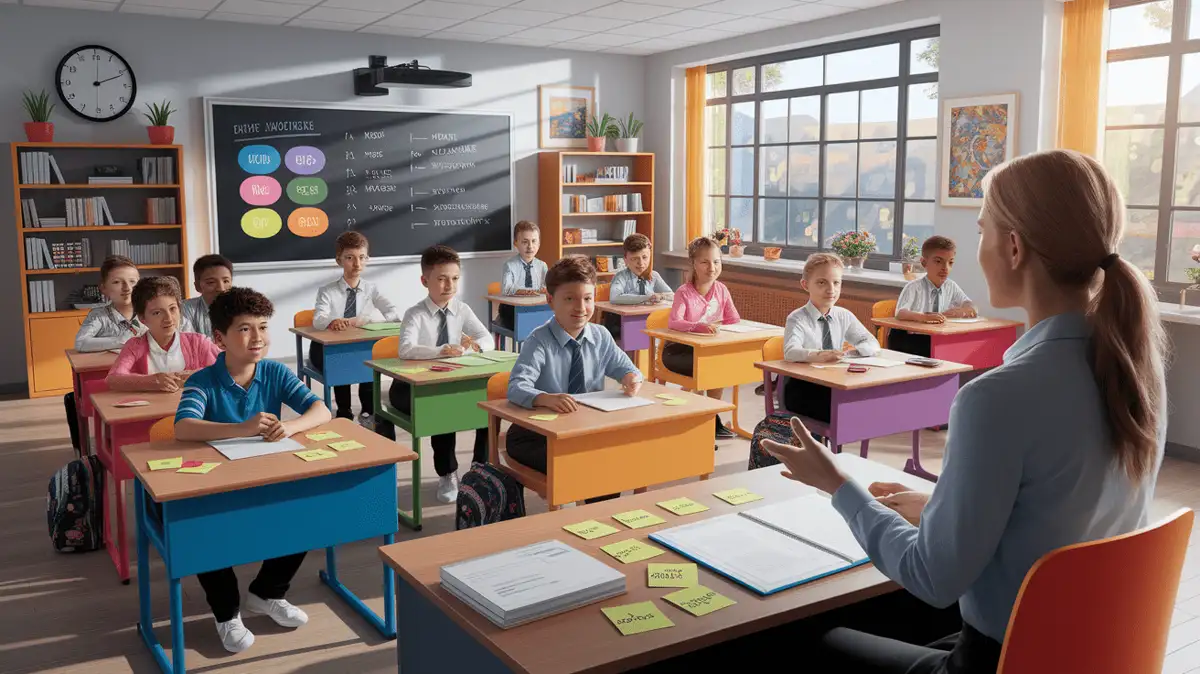
A concise lesson is not a normal lesson delivered faster. It protects one learnable objective, the model or information students need, a real attempt, feedback, and enough evidence for the next decision. Background, extra examples, elaborate transitions, technology setup, and extensions can wait when they do not serve that sequence.
Calculate the actual instructional window
Start with scheduled minutes, then subtract predictable fixed requirements: entry or dismissal procedures, attendance, safety steps, required breaks, material distribution, cleanup, movement, and accommodations that need time. Do not hide these demands inside practice time.
Scheduled period − fixed required time − realistic transitions = available instructional window.
Observe the actual routine over several lessons when possible. The purpose is a local estimate, not pressure to make every learner or class move at the same speed.
Sort the plan into must, should, and can wait
| Priority | Include when | Examples | Time-loss decision |
|---|---|---|---|
| Must | Without it, students cannot access the objective, make a supported attempt, or produce usable evidence. | Prerequisite check, key model or source, guided attempt, required support, independent evidence check, safety procedure | Protect or move the objective to another lesson; do not rush through it. |
| Should | It strengthens the current learning sequence but can be shortened without changing the objective. | Second example, partner comparison, additional practice set, brief application | Shorten to one item, combine with feedback, or schedule next. |
| Can wait | The must and should work is complete and the option remains meaningful and accessible. | Decorative product, extra context, extra station, optional technology feature, unrelated enrichment | Remove first; do not assign it as surprise homework. |
“Must” does not mean every interesting fact or every standard mentioned in a unit. It means the minimum coherent path for today’s objective. Use the current curriculum and local requirements to decide what belongs there.
Write a safe stopping point and contingency
Choose the stopping point before teaching. Good stops preserve meaning: after a worked example, after one guided attempt, after source annotation, or after data are safely collected. Poor stops leave a procedure, lab, discussion, sensitive topic, or student record unresolved.
- If 3–5 minutes are lost: remove a can-wait item or reduce the number of should-practice items.
- If a prerequisite is missing: use the planned model and guided attempt; move independent evidence to the next lesson if the target cannot yet be assessed fairly.
- If materials or technology fail: use the prepared low-setup route that elicits the same student thinking.
- If students are ready sooner: use a prepared extension that deepens the same objective; do not add disconnected busywork.
- If safety, access, or a required support cannot be maintained: pause or replace the activity rather than trading those conditions for time.
Worked 30-minute schedule
Grade 5 mathematics objective: Compare two fractions with unlike denominators using a visual model and explain the comparison. Starting evidence: Students can partition area models into equal parts. Available window: 30 minutes after required entry work. This is an example, not a recommended ratio for every 30-minute lesson.
| Minutes | Priority and action | Evidence and time-loss response |
|---|---|---|
| 0–3 | Must: Compare 1/2 and 1/3 on pre-partitioned models; state the objective. | Scan whether equal-whole prerequisite is present. |
| 3–9 | Must: Model 2/3 versus 3/5 with same-size rectangles; label the comparison sentence. | Students identify what makes the whole comparable. |
| 9–18 | Must: Guided comparison of 3/4 and 2/3 with individual models, then teacher feedback. | Check every model; if the prerequisite fails, stop after feedback and continue next lesson. |
| 18–24 | Should: One partner comparison using a supplied model and sentence frame; individual responses remain visible. | If time is lost, omit partner comparison and move to the exit item. |
| 24–29 | Must: Independently compare 3/8 and 2/5 with a model and explanation. | Sort by valid model, comparison, and explanation for next lesson. |
| 29–30 | Must: Collect work and state the next step. | Safe stop is after the independent model, even if the written explanation finishes next time. |
Worked 45-minute schedule
Grade 7 science objective: Use a data table to support a claim about how light intensity affects plant growth in the provided investigation. Starting evidence: Students can identify variables and read a simple table. Available window: 43 instructional minutes plus 2 minutes of required cleanup.
| Minutes | Priority and action | Evidence and time-loss response |
|---|---|---|
| 0–4 | Must: Identify independent and dependent variables in the displayed setup; state the claim-evidence goal. | Private response cards reveal prerequisite. |
| 4–11 | Must: Model reading one row, comparing conditions, and writing an evidence sentence without claiming causation beyond the design. | Students mark the two values being compared. |
| 11–25 | Must: Pairs analyze the supplied table; each student completes a claim-evidence organizer. | Teacher checks comparisons and missing-data notes. Paper packet is the technology backup. |
| 25–32 | Should: Compare two evidence sentences against criteria and revise individually. | If 5 minutes are lost, use one sentence instead of two. |
| 32–40 | Must: Write an independent claim, cite two values, and name one limitation. | This is the evidence used to plan reteaching or the next investigation. |
| 40–43 | Can wait: Add a graph sketch if core response is complete. | Remove first if time is short; it is not surprise homework. |
| 43–45 | Must: Collect materials and complete required cleanup. | Safe stop keeps data sheets intact and materials accounted for. |
Worked 60-minute schedule
Grade 10 social studies objective: Evaluate how two primary sources support different claims about a labor policy. Starting evidence: Students can identify source creator, date, and audience. Available window: 57 instructional minutes plus a 3-minute dismissal routine.
| Minutes | Priority and action | Evidence and time-loss response |
|---|---|---|
| 0–6 | Must: Inspect creator, date, audience, and central question for both sources. | Students annotate provenance in accessible source copies. |
| 6–16 | Must: Teacher models one claim-evidence-context note and one limitation. | Students label quotation and inference separately. |
| 16–32 | Must: Students annotate both sources independently, then compare selected evidence with a partner or through a written route. | Teacher checks source use before discussion. |
| 32–43 | Should: Structured discussion tests two competing claims; no personal political position is required. | If time is lost, students complete the same claim test in writing. |
| 43–54 | Must: Independent paragraph cites both sources, contextualizes one, and states a limitation. | Paragraph determines the next source-analysis support. |
| 54–57 | Can wait: Generate a further research question after the paragraph. | Move to the next lesson if the core paragraph needs more time. |
| 57–60 | Must: Collect sources and use required dismissal routine. | Safe stop protects source materials and student work. |
Blank must–should–can-wait planner
LIMITED-TIME LESSON PLANNER
Class/date:
Scheduled minutes:
Fixed required minutes:
Realistic transition minutes:
Available instructional window:

ONE OBJECTIVE
Students will:
Current prerequisite evidence:
Minimum evidence for the next decision:
Required supports and safety steps:

MUST
- Prerequisite check:
- Essential model/source/information:
- Supported student attempt:
- Feedback:
- Independent evidence check:
- Safe stop:

SHOULD
- Additional example/practice/application:
- How it may be shortened:

CAN WAIT
- Extension/context/feature:
- Where it belongs later:

TIME MAP
Minutes | Student action | Teacher action | Evidence
        |                |                |
        |                |                |
        |                |                |

CONTINGENCIES
If 3–5 minutes are lost:
If prerequisite evidence is weak:
If materials/technology fail:
If students are ready sooner:
If access or safety cannot be maintained:

AFTER-LESSON REVIEW
Actual time pattern:
Evidence collected:
Access issue:
Item to keep, shorten, move, or remove:
Next instructional decision:
Completed planner: 45-minute science example
LIMITED-TIME LESSON PLANNER
Class/date: Grade 7 science / Thursday
Scheduled minutes: 45
Fixed required minutes: 2 cleanup
Realistic transition minutes: Included in material handoff
Available instructional window: 43

ONE OBJECTIVE
Students will: Use table data to support a claim about light intensity and plant growth
Current evidence: Students identify variables and read simple tables
Minimum evidence: Claim, two cited values, and one limitation
Required supports/safety: Readable paper data table, text-to-speech file, dictated response route

MUST
- Prerequisite check: Identify variables
- Model: Compare one row and draft an evidence sentence
- Supported attempt: Analyze table with partner; individual organizer
- Feedback: Check comparison and evidence wording
- Independent evidence: Claim, two values, limitation
- Safe stop: Completed response collected before cleanup

SHOULD
- Compare and revise one sample evidence sentence
- Shorten by using one sample rather than two

CAN WAIT
- Sketch a graph of the data
- Use in the next lesson if the claim response needs more time

TIME MAP
0–4   | Variable check       | Scan cards/model route | Prerequisite
4–11  | Mark table values    | Model evidence sentence| Labeled values
11–25 | Analyze in pairs     | Prompt/check access    | Individual organizer
25–32 | Revise sample        | Give criteria feedback | Revised sentence
32–40 | Independent response | Monitor/collect        | Claim/evidence/limit
40–43 | Optional graph       | Confer                 | Extension only
43–45 | Cleanup              | Account for materials  | Safe close

CONTINGENCIES
Lose 3–5 minutes: Remove optional graph and use one revision sample
Weak prerequisite: Model variable identification; continue analysis next lesson
Technology failure: Use the prepared paper packet
Ready sooner: Graph and annotate the same data
Access/safety issue: Pause and use the accessible paper or dictated route

AFTER-LESSON REVIEW
Actual time pattern: [complete after lesson]
Evidence collected: [complete after lesson]
Access issue: [complete after lesson]
Revision: [keep / shorten / move / remove]
Next decision: [reteach table comparison / strengthen limitation / continue]
Review pacing with evidence
After the lesson, compare planned and actual minutes, but interpret the difference. Time may have been needed for a misconception, required support, useful question, equipment issue, or unclear direction. Record one cause and one change. Do not respond to every overrun by speaking faster or removing student practice.
If independent evidence is repeatedly squeezed out, narrow the objective or earlier instruction before trimming the assessment. If transitions consume time, teach and test the specific routine. If technology creates setup or login delay, compare it with a ready paper or low-technology route. Use the mid-lesson adjustment framework to connect evidence signals to planned changes.
No universal timing formula
The 30-, 45-, and 60-minute schedules illustrate complete reasoning paths; they are not recommended percentages. Appropriate time depends on the content, students’ starting evidence, age, task complexity, language demands, required accommodations, materials, safety, transitions, and local schedule. Protect the relationship among objective, instruction, attempt, feedback, and evidence, then set minutes from the conditions in front of you.
Classroom resources for this teaching goal
- Practical Lesson-Planning Pack — Use the copyable planner and worked example to connect the objective, student evidence, teaching sequence, access choices and next decision.
- Teach and Reteach Classroom Routines — Plan one routine with a clear cue, observable steps, modeling, rehearsal and a reteach check. Adapt the card to established local procedures.
Authoritative sources
- IES practice guide: Organizing Instruction and Study to Improve Student Learning — supports purposeful practice, spacing, and worked examples without prescribing one lesson clock.
- CAST Universal Design for Learning Guidelines — planning options for access; required individualized supports still apply.
- National Academies: How People Learn — background on learning, prior knowledge, practice, and instructional design.