
Classroom Management and Routines
Classroom Management: Routines, Access, Safety, and Evidence
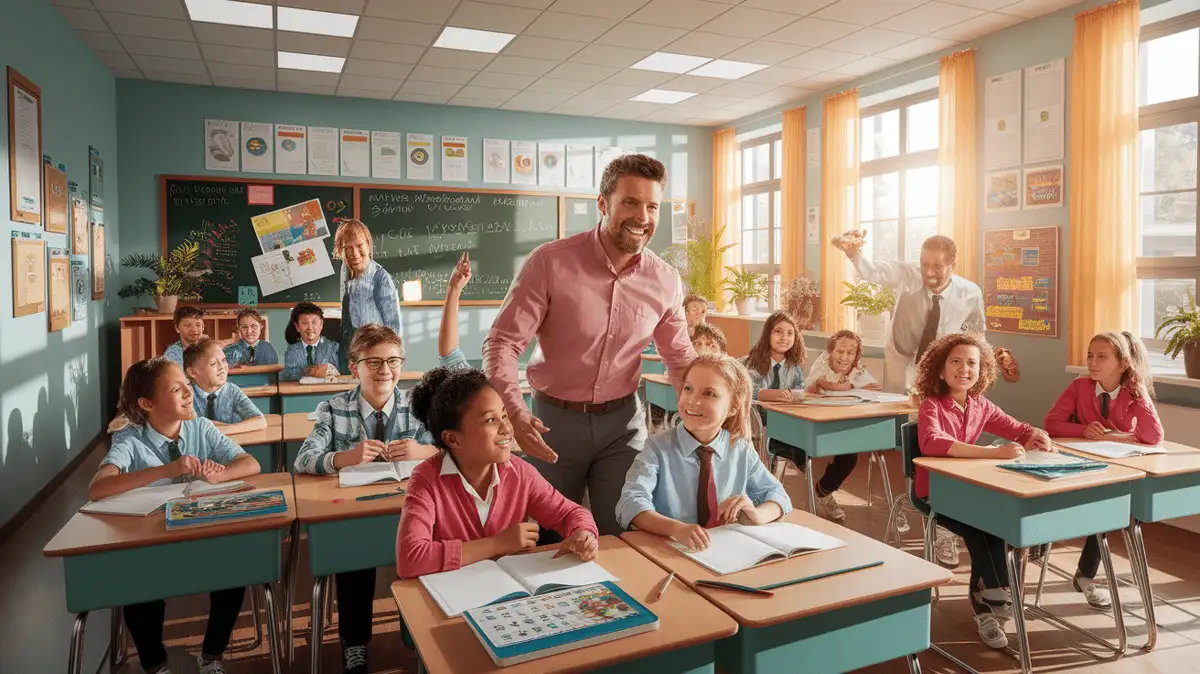
Classroom-routine action sequence
- Describe one recurring classroom event and the observable problem without assigning motive or a student label.
- Check the instruction, access, safety, timing, materials, and current plan or policy that shape the event.
- Write a short replacement procedure and an accessible help route.
- Model the procedure, let students practise it in context, and respond privately when additional support is needed.
- Review time, errors, participation, safety, student work, and feedback; revise the procedure rather than escalating an ineffective routine.
Worked example: collect materials without a rush
Hypothetical example: At the start of lab work, several groups crowd one supply table and miss the opening direction. The teacher assigns one clearly marked bin to each table, posts the three-step sequence “read, check, begin,” and provides an individual materials route for students whose access or safety plan requires it. Speed and silence are not part of the expectation.
For three lessons, the teacher records missing items, repeated directions, unsafe congestion, time until the first task begins, and student reports of barriers. If bins reduce congestion but create lifting or reach problems, the placement changes. The procedure is retained only if it supports access, safety, and the instructional start; it is not evidence about students’ character or compliance.
Copyable routine review
Recurring event:
Observable problem:
Instruction, access, safety, or policy checks:
Replacement procedure:
Model and practice plan:
Help or alternative route:
Evidence before:
Evidence after:
Keep, revise, replace, or seek support:
Classroom management should make expectations for routines, participation, safety, and instruction clear and workable. Define observable procedures, then review their effects rather than promising that disruptions will disappear.
Define routines and review their effects
The linked glossary describes classroom management as the skills and techniques used to maintain an organized learning environment. In practice, define observable routines for materials, participation, transitions, and help-seeking. Then review whether they support instruction, access, and safety without labeling students as disruptions to be controlled.
Teacher routines and respectful interactions can clarify daily expectations. Judge their effects through participation, transition time, access, safety, and student work rather than presenting them as a foundation for success beyond the classroom.
Setting Clear Expectations
Teach a small number of observable expectations, model them in context, provide practice and reminders, and distinguish skill or access needs from willful noncompliance.
Creating Meaningful Classroom Rules
Useful classroom rules are:
- Specific and observable: Instead of "Be respectful," try "Listen when others are speaking and wait your turn to share."
- Positively framed: Focus on what students should do rather than what they shouldn't.
- Student input: Invite students to identify confusing wording or barriers while keeping safety, access, rights, and school-policy requirements non-negotiable and within staff responsibility.
- Limited in number: Aim for 3-5 core rules that cover your most important expectations.
Explain what each expectation looks like in context and why it is needed. The linked overview provides additional examples, but knowing the rationale does not guarantee that a student can or will follow the routine. Teach, support, and review it.
Establishing Consistent Classroom Procedures
Rules address expectations, while procedures describe recurring logistics. Develop and teach clear procedures for:
- Entering and exiting the classroom
- Turning in assignments
- Getting materials and supplies
- Asking for help
- Using technology
As students learn a procedure, it may require fewer reminders and shorten transition time. Check the actual time, errors, access barriers, and need for support rather than assuming the procedure becomes automatic.
Building Positive Teacher-Student Relationships
Respectful teacher-student relationships can support communication about instructions, barriers, and help. Do not infer a student’s sense of care, respect, motivation, or willingness to meet expectations from the teacher’s intent; use private feedback and observable evidence.
Predictable, respectful follow-through
Use predictable routines, clear explanations, respectful correction, private support, and consistent follow-through. Ask students through appropriate feedback routes whether the procedures are understandable and respectful rather than inferring trust.
- Professional presence: Communicate naturally while maintaining professional boundaries.
- Showing appropriate interest: Learn and use students’ preferred names where authorized. Do not solicit, memorize, or record personal details unless they are needed for an educational or safety purpose and handled under school privacy procedures.
- Following through: Carry out stated actions consistently when they remain appropriate, lawful, accessible, and within school policy; explain and correct a commitment that cannot be kept.
- Admitting mistakes: Model accountability and a growth mindset.
Proactive Instructional Strategies
Clear, accessible instruction can prevent some avoidable confusion, but engagement does not eliminate behavior or safety concerns. The linked instructional-strategies guide can help with task design; continue to follow individualized plans and school procedures when concerns arise.
Vary methods for a defined reason
Vary an instructional method when the objective, evidence needed, access requirements, or pacing indicate a reason to do so. Examples include:
- Interactive discussion: Provide several valid response routes, including speaking, writing, selecting, or passing when appropriate; do not require every student to talk publicly.
- Hands-on activity: Use materials and actions that serve the objective, complete the required safety review, and provide an accessible alternative that assesses the same learning.
- Movement option: Offer brief movement only when it is safe and relevant, preserve an accessible stationary route, and follow health, mobility, and individualized plans.
- Technology option: Use an approved tool only for a defined instructional or access need, review privacy and age terms, provide a non-digital route, and assess the work rather than assuming the tool captures attention or improves learning.
When you're writing effective lesson plans, consider task clarity, access, pacing, routines, and opportunities to respond. If disruptions increase, inspect these and other contextual factors before deciding what to change.
Meeting Diverse Learning Needs
Students differ in prior knowledge, language, access needs, and responses to a task. Consider Universal Design for Learning (UDL) when planning options. Follow individualized requirements and use observable evidence rather than presumed learning styles. Matching instruction to presumed learning styles is not supported by strong evidence. Use multiple representations when they serve the objective and remove an identified barrier. Access supports do not guarantee that behavior challenges will disappear.
Effective Behavior Management Techniques
Even with careful planning, teachers may need to respond to behavior that interferes with instruction, access, or safety. Describe the observable behavior and immediate need, use the least intrusive appropriate response, and follow individualized plans, safeguarding requirements, and school procedures rather than diagnosing intent.
Using specific acknowledgment
Specific acknowledgment can tell a student which part of a stated routine was observed. It does not necessarily increase that behavior; its effect varies by student, context, delivery, and whether the routine itself is accessible. Use these examples with clear limits:
- Private acknowledgment: Use a brief verbal or non-verbal signal that the student understands and accepts. Do not assume a smile or high-five is welcome, and do not require physical contact.
- Optional classroom role or choice: If local policy permits, offer a proportionate option that is not required for access to learning, technology, movement, food, or other basic classroom participation. Avoid public comparison and coercive reward systems.
- Class-wide acknowledgment: Do not make food, privileges, or celebration contingent on every student’s behavior. Use an inclusive acknowledgment that does not expose, pressure, or punish an individual or group, and follow allergy, dietary, and school requirements.
Use specific, proportionate acknowledgment tied to the stated routine. Avoid public comparison, coercive reward systems, or assuming praise changes behavior for every student.
Responding to behavior that affects instruction or safety
When behavior interferes with instruction or safety, describe the specific action and immediate impact without blaming one or two students for the class as a whole. The APA classroom resource offers general guidance; respond calmly, protect safety, preserve dignity, and follow the student’s plan and school procedures.
Try these approaches:
- Non-verbal cue: Use an agreed signal when possible. Consider personal space, disability, trauma-related, cultural, and safety factors before changing proximity; do not assume moving closer will resolve the issue.
- Private redirection: Quietly redirect without calling attention to the behavior.
- Choice-giving: Offer two valid, accessible routes that both preserve the learning objective and required supports. A pause should follow the student’s plan and school procedure and should not become exclusion from instruction.
- Related response: Use only responses authorized by school policy, proportionate to the observable behavior, and consistent with disability, access, safety, and due-process requirements. Do not label a punitive or unrelated penalty a natural consequence.
Maintaining Smooth Transitions and Classroom Flow
Transitions can affect time, access, safety, and continuity between tasks. Define the steps, teach them, and review where delay or confusion occurs rather than labeling a transition chaotic or treating it as a test of management skill.
Planning and reviewing lesson transitions
Plan the signal, directions, materials, timing, and access route for a transition, then revise the procedure using observed evidence:
- Signal systems: Develop consistent signals (chime, hand clap, countdown) to get attention
- Clear directions: Give step-by-step instructions before releasing students to transition
- Time expectations: State an estimated time and provide flexibility or required accommodations. Do not use a 30-second deadline when speed is unrelated to the objective or creates an access or safety barrier.
- Supported practice: Rehearse the transition enough to identify unclear steps and needed supports. Stop repeating a routine that creates distress, access barriers, or no measurable improvement.
Revise a lesson plan during instruction when current evidence shows that the timing, transition, access route, explanation, or task no longer supports the objective. Record the reason and preserve essential instruction rather than treating every deviation as either failure or success.
Building Sustainable Teacher Routines
Teacher routines can reduce avoidable preparation and technology problems. The UConn classroom-management resource offers planning guidance, but organization does not ensure smooth operations; prepare a fallback and review actual breakdowns.
Develop consistent routines for:
- Beginning and ending each class period
- Distributing and collecting materials
- Taking attendance
- Handling interruptions
- Emergency procedures: Follow the school’s current emergency plan, assigned staff roles, communication protocol, and required individual access or health arrangements; do not improvise a classroom-only procedure.
Reflecting and Adjusting Your Approach
Regular reflection can help teachers compare a routine’s purpose with observed participation, access, transition time, safety, and student work. Reflection alone does not distinguish the most effective teachers or establish that an approach serves every student.
Regular Check-ins
Ask yourself these questions weekly:
- Which classroom management strategies worked best this week?
- What challenges did I face, and how did I handle them?
- What would I do differently next time?
Student Feedback
Invite student feedback through an accessible, private, and optional route. Ask about a specific routine or barrier, avoid public discussion of personal circumstances, collect only information needed for the decision, and explain how the feedback will be used.
Professional Growth
Use professional learning, colleague observation, and local support when a routine is not working; evaluate a change with observable classroom evidence.
Review one routine
Review one routine using access, safety, transition time, participation, and student-work evidence. Keep what supports its stated purpose and revise the first barrier or unnecessary demand.
Tools in this guide: Revise a routine with a planning sequence, a focused materials-transition example, and a copyable evidence review.
Classroom resources for this teaching goal
- Teach and Reteach Classroom Routines — Plan one routine with a clear cue, observable steps, modeling, rehearsal and a reteach check. Adapt the card to established local procedures.
- Clear Directions and Language-Support Pack — Use the planner and worked examples to clarify a task's words and steps while keeping the learner's thinking decisions visible. Record support that changes what a response can show.