
Classroom Management and Routines
Brain Breaks and Classroom Movement: Cues, Access, and Transition Checks
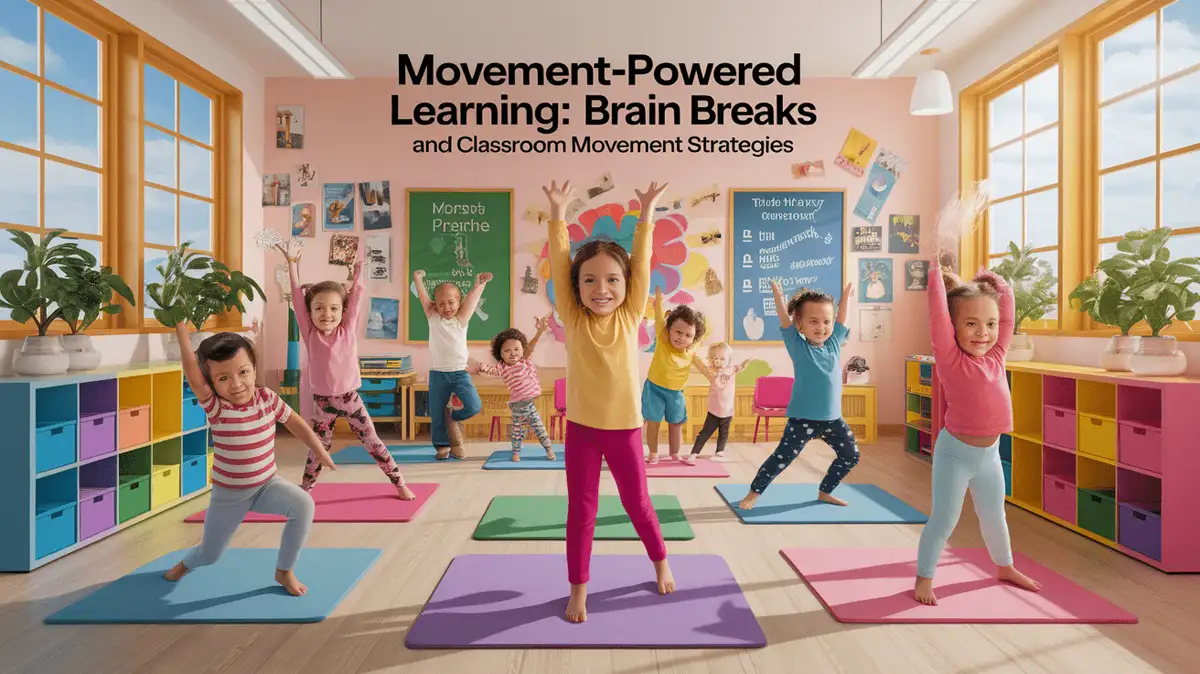
Using Short Classroom Movement Breaks
Brain breaks are short, intentional pauses during instruction that can include stretching or other movement. Choose activities based on the class context, accessibility needs, local safety guidance, and the response you observe; do not promise a particular physiological or cognitive result.
Quick Brain Break Activities
Five minutes may be enough for one brief activity. Use these examples only after checking local safety, accessibility, space, and supervision requirements:
- Stretch Stations: Offer optional seated or standing stretches within local guidance. Do not promise that the stretches cover every muscle group.
- Desk Drumming: Invite a brief, low-volume rhythm activity only if noise and desk-use rules allow, and provide a quiet alternative.
- Music and Movement: Offer an optional movement or seated rhythm activity; do not frame restlessness as a behavior that students must dance away.
- Breathing or Quiet Pause: Offer a choice to breathe normally, look at a fixed point, or sit quietly; do not require students to close their eyes or present the activity as treatment for test anxiety.
- Balance Option: Use only in a clear, supervised space and provide a seated alternative; do not promise a motor-skill or attention benefit.
The linked activity collection provides examples but does not guarantee better focus, less restlessness, or improved retention. Observe the response to a specific routine and revise it as needed.
Embedding Movement into Lessons
Movement can sometimes be part of content instruction: a math class might use a human number line, a literature class might offer an optional character-position activity, or a science class might model a process. The linked guidance describes options, but acting out content does not by itself improve attention or retention.
Classroom Tools and Resources
Classroom tools are optional. Choose an item only when it serves the planned routine and meets local safety, privacy, accessibility, cleaning, and supervision requirements. Examples include:
- Portable mats, if school-approved and compatible with cleaning, mobility, and floor-access requirements; provide an equivalent chair or standing option.
- Prompt cards or foam dice with teacher-vetted choices that include seated, low-impact, and opt-out options; avoid fixed repetitions that may not be safe or accessible.
- School-approved video resources that meet privacy, advertising, captioning, audio, and accessibility requirements; preview each resource before use.
- School-approved audio at an appropriate volume, with a no-music alternative for students who need or prefer one.
- Visual cue cards for teacher-led routines or voluntary student leadership, with the teacher retaining supervision and a non-leading role available.
Tools can make a routine easier to start, but they do not guarantee classroom management or access. Check whether each item is usable, optional, and necessary before adopting it.
Implementation Considerations
Classes and individual students may respond differently to movement. The linked review is one source to consider; select activities by age, context, observed response, and required accommodations rather than referring broadly to students with “special needs.” Also consider:
- Schedule breaks where practical and use the observed response to decide whether to repeat them; do not assume an activity will energize or calm the whole class.
- Offer a choice among approved movement, stretching, or quiet options rather than requiring one mode of participation.
- Vary the activities to prevent boredom.
- Offer voluntary student leadership roles when appropriate; do not treat leading a break as evidence of leadership development or self-regulation.
- Use a predictable start and stop cue, then review the actual transition and participation; consistency alone does not ensure behavioral outcomes.
Even five-minute bursts can provide a brief pause from seated work. Choose the duration according to the schedule, activity, accessibility needs, and observed response rather than promising a particular cognitive benefit.
Measuring Impact and Evolving Routines
To review a movement routine, record its duration, transition time, participation choices, access problems, and whether it disrupted or helped the immediate classroom routine. Teacher observations can guide routine changes, but they do not prove that the break caused changes in test scores, work quality, cerebral blood flow, executive function, or academic performance.
Reviewing and Adjusting the Routine
Student requests may inform a decision, but they do not prove benefit. The linked overview offers implementation suggestions. Monitor access, disruption, and student choice, and do not infer enjoyment, self-regulation, social connection, or readiness to learn from participation alone.
Movement-break action sequence
- Name the classroom moment and the limited purpose of the break.
- Select a brief, low-risk movement and an equally acceptable seated or stationary option.
- Check space, health plans, mobility, sensory needs, clothing, materials, and school procedures.
- Teach the start, stop, spacing, and re-entry cues before trying the routine once.
- Review transition time, participation by route, distress or safety concerns, and readiness for the next task before retaining it.
Worked example: one transition trial
Hypothetical example: Before a quiet reading block, a class tries a two-minute pattern of shoulder rolls, hand presses, and slow reaches beside desks. Students may instead follow the same timing with seated hand and arm movements or remain still. The teacher uses one start cue and one stop cue; no student is asked to explain a choice or perform publicly.
The teacher records the total time from the start cue to books open, any unclear directions, requests to stop, and whether the next task begins as planned. The routine is shortened, revised, or discontinued if it creates unsafe spacing, distress, access barriers, or more transition loss than the earlier routine. Calm appearance is not treated as proof of attention or learning.
Copyable movement-break review
Classroom moment and limited purpose:
Movement option:
Seated or stationary option:
Space, safety, and required support checks:
Start and stop cues:
Earlier transition time:
Trial transition time:
Participation or access concerns:
Keep, revise, or stop:
Classroom resources for this teaching goal
- Teach and Reteach Classroom Routines — For the cue, sequence and return to work around an approved optional break, use the routine card with your existing local participation and supervision arrangements.
Tools in this guide: Plan a movement break with a practical sequence, a seated-equivalent example, and a copyable transition review.