Teaching need

Multilingual Learners

Support language development and content learning with clear language objectives, models, and participation options.

Search the full library

Choose a route

Use the question that best matches the decision in front of you; the labels and filters below narrow the library without implying that one method fits every context.

Suggested starting sequence

  1. Academic Language Across the Curriculum: Task Demands, Models, and Evidence

    Identify the academic-language demands of one content task.

  2. How to Write ELD Standards in a Lesson Plan

    Connect the applicable ELD standard to a content objective and observable language evidence.

  3. Bridging Language and Content: A Practical Guide to the SIOP Model

    Use the SIOP components to plan input, interaction, practice, and review for that lesson.

Recent hub updates

Updated July 19, 2026: added a decision aid, starting sequence, resource filters, preparation labels, and a subtopic map.

Recently expanded guides:

6 resources

Illustration for Academic Language Across the Curriculum: Task Demands, Models, and Evidence

Multilingual Learners · Planning guide · 20 minutes

Academic Language Across the Curriculum: Task Demands, Models, and Evidence

Identify the vocabulary, sentence patterns, and discussion moves a subject task requires, then plan instruction and progress checks across content areas.

Best for: Cross-curricular teacher teams

Next action: Choose one upcoming task and write the vocabulary, sentence frame, and discussion move students need to complete it.

Learner participation and practice

Illustration for Adult ESL Lesson Plans: Practical Framework and Examples

Multilingual Learners · Lesson framework and examples · 30 minutes

Adult ESL Lesson Plans: Practical Framework and Examples

Plan an adult ESL lesson around a real language use, explicit objective, model, guided practice, accessible materials, and a brief performance check.

Best for: Adult ESL instructors

Next action: Write one real-world language objective and the final speaking, listening, reading, or writing evidence before choosing activities.

Planning and design

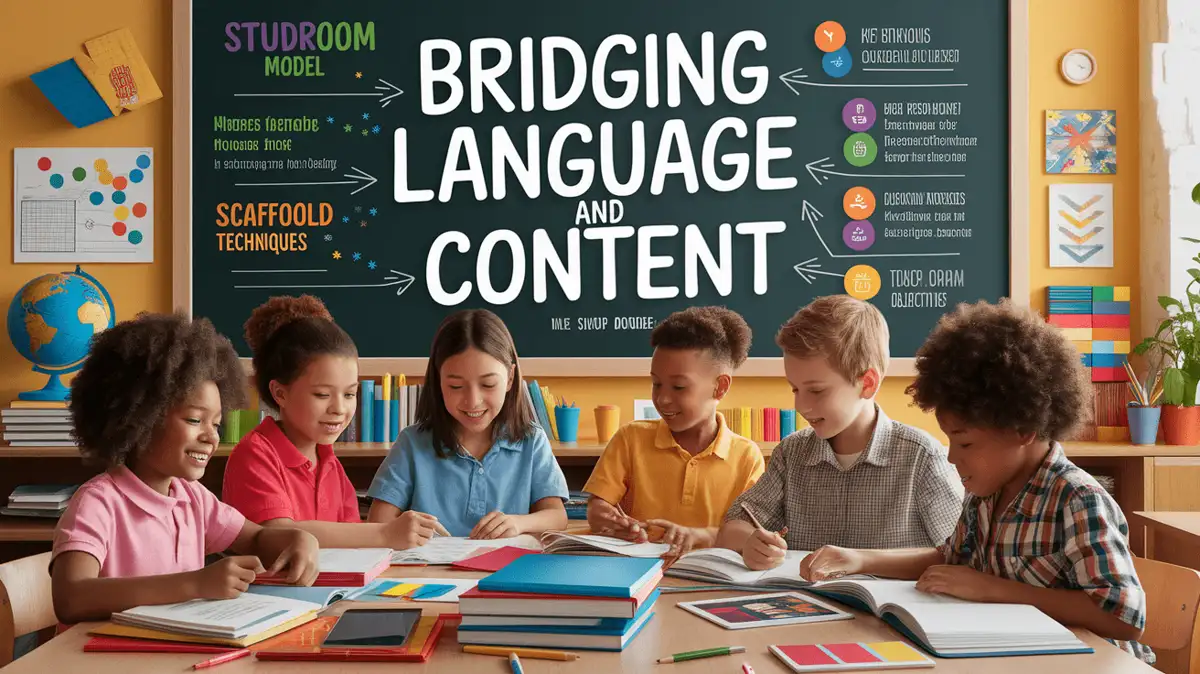
Illustration for Bridging Language and Content: A Practical Guide to the SIOP Model

Multilingual Learners · Model implementation guide · 25–35 minutes

Bridging Language and Content: A Practical Guide to the SIOP Model

Use the SIOP framework to connect content and language objectives with comprehensible input, interaction, practice, review, and observable lesson evidence.

Best for: Teachers planning language-rich content lessons

Next action: Write one content objective and one language objective, then identify where students will practice and demonstrate both.

Learner participation and practice

Illustration for How to Write ELD Standards in a Lesson Plan

Multilingual Learners · Planning template · 25 minutes

How to Write ELD Standards in a Lesson Plan

Write an ELD standard into a lesson plan by linking language function, language demand, proficiency support, content objective, and observable evidence.

Best for: Teachers planning integrated or designated ELD

Next action: Choose the applicable ELD standard and write the language students will produce to demonstrate the content objective.

Planning and design

Illustration for Translanguaging Strategies: Language Access, Choice, and Task Evidence

Multilingual Learners · Planning guide · 20–30 minutes

Translanguaging Strategies: Language Access, Choice, and Task Evidence

Plan translanguaging with a clear content and language purpose, multilingual resources, participation choices, accurate language support, and observable evidence.

Best for: Teachers planning for multilingual learners

Next action: Choose one task and decide where home-language discussion, annotation, or drafting supports the objective without changing the final evidence.

Access and support

Illustration for Vocabulary Instruction: Opportunity, Morphology, Context, and Retrieval

Multilingual Learners · Vocabulary planning guide · 20 minutes

Vocabulary Instruction: Opportunity, Morphology, Context, and Retrieval

Review vocabulary opportunity without deficit labels, then plan explicit word teaching, morphology, context, retrieval, wide reading, and access to rich language.

Best for: Teachers planning explicit vocabulary instruction

Next action: Choose three high-value words from an upcoming text and plan meaning, morphology, examples, use, and later retrieval for each.

Subject teaching