
Introduction – The Power of Collaboration
Hey there, fellow educators! Remember the magic that happens when your students suddenly click as a team? Those light-bulb moments when they solve problems together that stumped them individually? That’s the power of collaboration in action! As a classroom teacher for over 15 years, I’ve witnessed firsthand how collaborative learning transforms not just academic outcomes, but the entire classroom vibe.

Research consistently shows that when we create environments where students work together toward shared learning goals, everyone wins! Studies highlighted by the National Education Association demonstrate that collaborative classrooms boost academic achievement while developing those crucial life skills like communication, leadership, and problem-solving. Plus, there’s nothing quite like watching a formerly shy student find their voice within a supportive team!
The beauty of collaborative classroom cultures isn’t just about student benefits either—they reduce teacher isolation, increase job satisfaction, and create that sense of community we all crave in our professional lives. Ready to dive into building your own collaborative classroom wonderland? Let’s get started!
Key Elements of a Collaborative Classroom
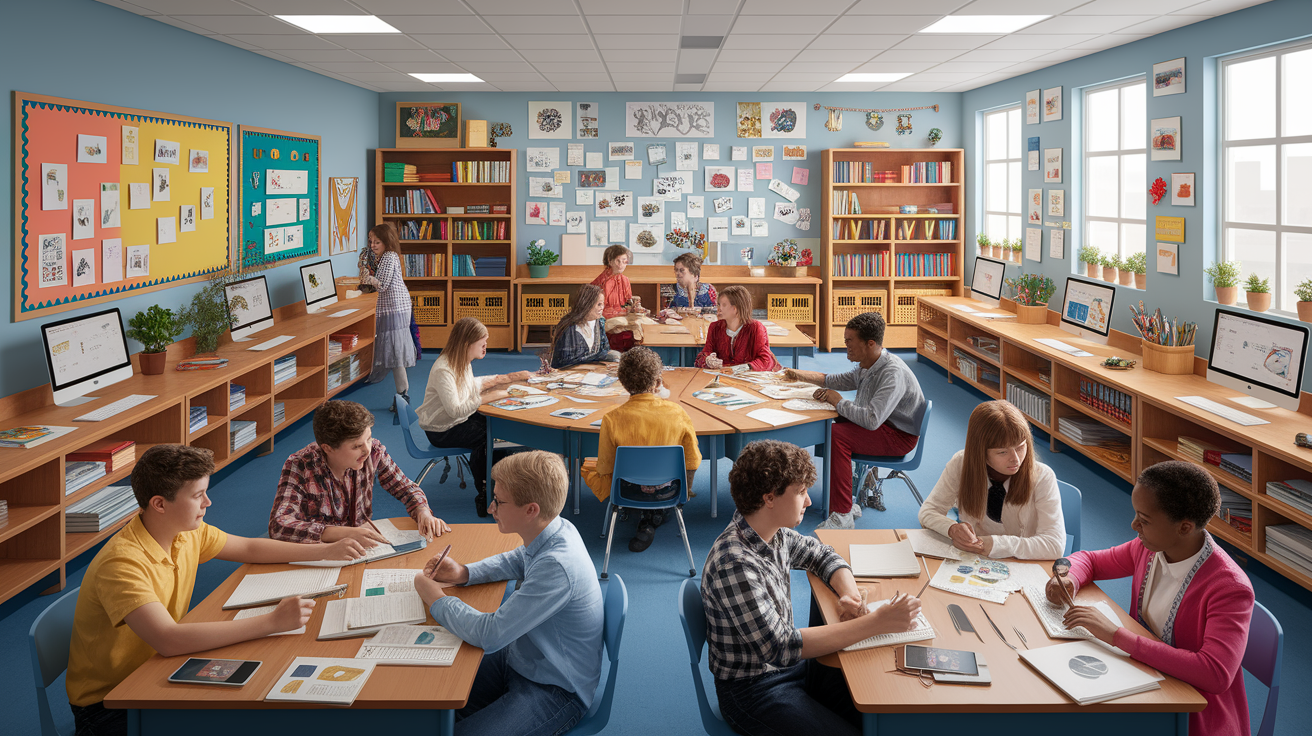
Creating a truly collaborative classroom isn’t about randomly grouping students and hoping for the best (we’ve all seen how that can go!). It requires intentional design and several key ingredients:
Clear Structures and Expectations
Students thrive with structure! Effective collaboration requires clear protocols that create positive interdependence (everyone needs each other to succeed) and individual accountability (no hitchhikers allowed!). In my classroom, we establish group norms on day one and revisit them regularly—things like “everyone contributes” and “respect all ideas, even when challenging them.”
Safe and Supportive Environment
Collaboration flourishes when students feel psychologically safe to share thoughts without fear of ridicule. Building trust takes time, but it’s worth every minute! I start with low-stakes team activities and gradually increase the challenge as comfort levels rise. Those early “get-to-know-you” games aren’t just fun—they’re laying critical groundwork for deeper academic collaboration later!
Reimagined Teacher Role
In collaborative classrooms, we shift from “sage on the stage” to “guide on the side.” This doesn’t mean less work (sometimes it’s more!)—but it means different work. As Digital Promise’s resources explain, we become designers of meaningful tasks, facilitators of productive discussions, and coaches who help groups work through challenges.
Thoughtful Assessment Practices
The age-old question: “But how do I grade group work fairly?” Effective collaborative assessment balances individual accountability with group outcomes. I use reflection journals, individual components within group projects, and peer evaluations to get a complete picture of each student’s contribution while still honoring the collective achievement.
Inclusivity by Design
A collaborative classroom must work for EVERY student. The Inclusive Schools Network emphasizes that well-structured collaboration amplifies diverse voices and builds cross-cultural competencies. This means thoughtfully designing experiences that leverage different strengths and provide multiple ways for students to contribute.
Strategies for Building Collaboration
Now for the fun part—turning these principles into action! Here are my favorite tried-and-true strategies that transform classroom dynamics from competitive to collaborative:
Start Small and Scale Up
Begin with quick think-pair-share activities before launching into complex group projects. This builds collaborative muscles gradually! I love starting each unit with “turn and talk” moments that give students practice in active listening and idea-sharing before tackling more substantial teamwork.
Jigsaw It Up!
Cornell’s Center for Teaching Innovation highlights jigsaw as a powerful collaborative technique, and I couldn’t agree more! Assign different parts of content to “expert groups” who then reform into “home groups” where each member teaches their piece. It creates that beautiful positive interdependence where everyone has something valuable to contribute!
Roles That Roll
Assign meaningful roles that rotate regularly—facilitator, recorder, timekeeper, reporter, fact-checker, etc. This ensures everyone participates and develops different skills. Pro tip: Create fun role cards with specific responsibilities listed. My middle schoolers actually get excited when it’s time to pick new roles!
Project-Based Learning Magic
Nothing builds collaboration like authentic projects with real-world connections. When my students created public service announcements about local environmental issues, they naturally divided tasks based on strengths while supporting each other toward a common goal. The key is designing projects complex enough to require multiple perspectives but structured enough to keep everyone on track.
Digital Collaboration Tools
Technology can supercharge collaboration when used thoughtfully! Shared documents allow real-time co-creation, virtual whiteboards capture brainstorming, and discussion platforms extend conversations beyond class time. These tools also create space for quieter students who might not speak up during in-person discussions.
Celebrate Process, Not Just Product
Take time to recognize great collaborative behaviors as they happen! “I noticed how Jayden’s question helped your group reconsider your approach” reinforces the kind of interactions we want to see. Make reflection on group process a regular part of your routine, not just an afterthought.
Overcoming Challenges
Let’s be real—building collaborative classroom cultures isn’t always smooth sailing! Here are common challenges and practical solutions:
The Participation Imbalance
We’ve all witnessed it—one student dominates while others fade into the background. Research on collaborative learning suggests structured roles and clear individual accountability help address this issue. I use “talking tokens” with younger students (everyone gets three contributions before anyone gets a fourth) and contribution trackers with older students.
The “Just Let Me Do It Myself” Syndrome
High-achieving students sometimes resist group work, preferring to control outcomes themselves. The solution? Design tasks that are genuinely “better with more brains”—complex enough that even your strongest students benefit from multiple perspectives. Also, explicitly teach and assess collaboration as a valuable skill in itself.

Assessment Anxieties
Parents and students alike worry about fair grading in collaborative work. Address this head-on by using transparent rubrics that evaluate both individual contributions and group outcomes. I’ve found success with “base group grades” that can be modified up or down based on individual components and peer evaluations.
Social Dynamics and Conflicts
Friendship groups don’t always make the best work groups! Strategic grouping that mixes abilities and social circles often produces better results. School leadership resources emphasize teaching conflict resolution skills explicitly rather than avoiding potential conflicts. Those “how to disagree respectfully” mini-lessons pay dividends all year!
Inclusion Challenges
Inclusive Schools Network resources highlight that students with learning differences may need additional supports to fully participate. Consider accommodations like role cards with visual cues, sentence starters for discussions, or pre-teaching vocabulary for English language learners. The goal is equitable access to collaboration, not identical participation.
Conclusion – The Future of Collaborative Learning
As we look ahead, collaborative classroom cultures will only become more essential in preparing students for an increasingly interconnected world. The workplace our students will enter demands exactly the skills collaborative learning develops: communication across differences, creative problem-solving in teams, and the ability to synthesize diverse perspectives.
Remember, building a collaborative classroom isn’t about perfection—it’s about progress. Each small step toward greater student interdependence and shared ownership of learning transforms not just academic outcomes but the very fabric of your classroom community.
So start tomorrow with one collaborative routine, celebrate small wins, and watch as your students gradually develop into the confident, cooperative thinkers our world so desperately needs. You’ve got this, and your students will thank you for giving them not just content knowledge but the collaborative superpowers they’ll use for a lifetime!